
Why does sunscreen sting my eyes?
Sunscreen usually stings the eyes because the formula migrates with sweat, oils, rubbing, or placement too close to the lash line. The fix is technique first, not SPF avoidance.
On this page
Few things ruin a responsible morning faster than sunscreen slowly walking into your eyes.
You did the good thing. You used SPF. Then, ten minutes later, your eyes water like you have been emotionally moved by a weather forecast.
I have helped enough people with sensitive, acne-prone, and rosacea-prone skin to know this problem matters. If sunscreen hurts every morning, people stop using it. A technically excellent SPF that you avoid is not excellent in real life.
The short answer
Sunscreen usually stings the eyes because the formula migrates.
It can move with:
- sweat
- facial oil
- watery eyes
- rubbing
- makeup
- sunglasses pressure
- applying too close to the lash line
- a formula that your eye area dislikes
The American Academy of Dermatology explains that mineral sunscreens use zinc oxide and/or titanium dioxide, and dermatologists often recommend physical/mineral sunscreen for sensitive skin[1]. That does not mean every chemical sunscreen is bad or every mineral sunscreen is perfect. It means format and formula matter.
Why the eye area is so unforgiving
The eye area has thinner, mobile skin and a lot of daily movement.
Blinking, smiling, sweating, rubbing, and sunglasses all help products travel. A sunscreen that feels fine on the cheek can become miserable if it reaches the tear film.
The goal is not to fear sunscreen ingredients. FDA sunscreen orders set the current U.S. framework for OTC sunscreen products[2], and sun protection still matters. The goal is to stop putting the wrong texture in the wrong place.
What to try first
Start with technique before you buy another drawer of SPF.
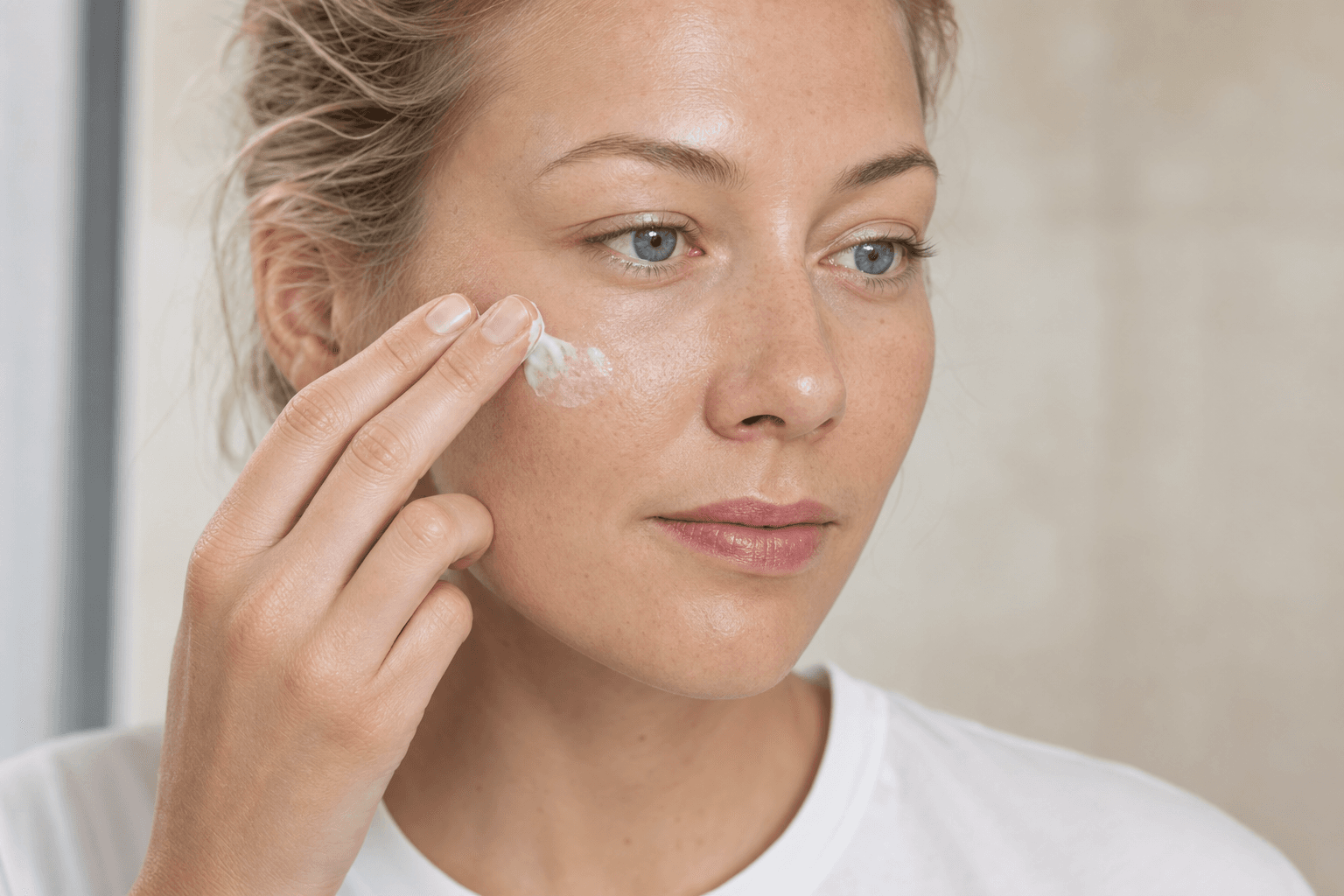
- Apply sunscreen to the face, but leave a tiny margin from the lash line.
- Tap product around the orbital bone instead of rubbing into the eyelids.
- Let sunscreen set before makeup or sunglasses.
- Avoid heavy moisturiser directly under sunscreen near the eyes if it makes things slide.
- Use sunglasses and a hat so protection does not depend on cream alone.
If that helps, the problem was likely migration, not the entire category of sunscreen.
When to change formula
If technique does not help, change the texture.
Many people with sting-prone eyes prefer:
- fragrance-free sunscreen
- mineral filters such as zinc oxide or titanium dioxide
- sunscreen sticks around the eyes
- less runny gels near the lash line
- separate eye-area SPF if the rest of the face loves a different formula
Sunscreen contact sensitivity is real for a smaller group of people. A 2024 review discusses allergic and photoallergic contact dermatitis from topical sunscreens[3]. If you get eyelid swelling, rash, repeated itching, or reactions from many products, stop guessing and ask about patch testing.
The practical takeaway
Do not solve eye stinging by quitting SPF.
Move the product a little farther from the lash line. Let it set. Use sunglasses. Try a less mobile texture. If your eyes still complain, change formula calmly.
The best sunscreen is not the one with the most impressive label. It is the one your face and eyes let you wear again tomorrow.
People also ask
Is sunscreen supposed to sting my eyes?
No. It is common, but not useful. If a sunscreen repeatedly stings your eyes, change placement, format, or formula.
Which sunscreen is best if my eyes sting?
Many sensitive-skin users do better with fragrance-free mineral sunscreens or waxier stick formulas around the eyes. The finished formula still matters.
Can I skip sunscreen around my eyes?
Do not leave the area unprotected. Use sunglasses, shade, hats, and a formula or format your eye area tolerates.
Keep reading
Citations
- American Academy of Dermatology. How to decode sunscreen labels.AAD
- FDA. Questions and Answers: FDA posts deemed final order and proposed order for over-the-counter sunscreen.FDA
- Heurung AR, Raju SI, Warshaw EM. Topical Sunscreens: A Narrative Review for Contact Sensitivity, Allergic Contact Dermatitis, and Photoallergic Contact Dermatitis. Dermatitis. 2024.PMC11616936