
Chamomilla Recutita Flower Extract
German chamomile flower extract can support a calm-feeling formula, but direct facial-skincare evidence is limited and daisy-family allergy deserves more attention than botanical marketing usually gives it.
At a glance
What Chamomilla Recutita Flower Extract does for skin, and how to read the practical safety signals.
- German chamomile: A flower extract from Matricaria chamomilla, distinct from Roman chamomile water.
- Support role: Best understood as a skin-conditioning ingredient inside a complete formula, not a treatment for redness or eczema.
- Allergy nuance: Chamomile belongs to the Asteraceae or daisy family, so known plant allergy calls for caution.
- Type
- Botanical extract
- Rating
- Pregnancy
- Considered safe
- Comedogenic rating
- 0/5 (Won't clog pores)
- Vegan
- Yes
- Suited skin types
- All skin types
On this page
The short answer
Chamomilla Recutita (Matricaria) Flower Extract is German chamomile flower extract. Cosmetic formulators use it mainly for skin conditioning and soothing support.
It can be a pleasant part of a moisturiser for dry or sensitive skin. It is not a medical treatment for eczema, rosacea, acne, or an allergic rash.
The distinction matters because chamomile has excellent name recognition. A familiar cup of tea can make an INCI line sound more proven than it is.
German chamomile is not Roman chamomile
The two common chamomiles belong to the same broad plant family but come from different species:
- German chamomile: Matricaria chamomilla, also called Chamomilla recutita
- Roman chamomile: Chamaemelum nobile, also called Anthemis nobilis
This page covers the German flower extract. Anthemis Nobilis Flower Water is the Roman chamomile water used in some skincare formulas.
They share some familiar constituents and a soothing reputation, yet an extract, flower water, and essential oil are not interchangeable. Solvent, processing, concentration, and plant part change what reaches the final cream.
What the evidence supports
The Cosmetic Ingredient Review assessment describes Chamomilla recutita-derived ingredients mainly as fragrance and skin-conditioning ingredients. Its expert panel concluded that the reviewed flower-derived ingredients are safe in current cosmetic use when formulated to be non-sensitising[[1]].
That conclusion supports use and safety under proper formulation. It does not prove that a small amount of extract will clear facial redness.
A scientific overview of chamomile discusses compounds such as terpenoids and flavonoids and summarises anti-inflammatory and traditional topical uses[[2]]. A 2025 systematic analysis of randomized chamomile trials found anti-inflammatory signals, with much of the useful clinical evidence coming from oral inflammation and other medical settings rather than everyday facial moisturisers[[3]].
My practical rating is therefore “support ingredient”. There is credible biology and a long history of use, but formula-specific cosmetic evidence is modest.
Where it fits in a routine
German chamomile extract makes most sense inside:
- a fragrance-free moisturiser
- a gentle cleanser
- a barrier-support formula around retinoids or acids
- a light product for dry, tight, or reactive-feeling skin
It works comfortably beside panthenol, allantoin, glycerin, oat, and niacinamide. You do not need a separate chamomile serum if those jobs are already covered by one good moisturiser.
The full formula remains the important part. A heavily fragranced “calming chamomile” toner may be less suitable for reactive skin than a plain cream with no plant story at all.
The allergy nuance
Chamomile belongs to the Asteraceae family, historically called Compositae. Ragweed, daisies, arnica, and calendula sit in the same large family.
Shared family membership does not mean everyone who reacts to one plant will react to every other. It does mean a known chamomile or daisy-family allergy deserves attention.
Stop using the product if you develop an itchy spreading rash, swelling, or blistering. Burning immediately after application may be irritation; a delayed itchy rash may point toward allergic contact dermatitis. Those patterns overlap, so repeated reactions are a good reason to see a qualified dermatologist rather than testing more botanicals on the same area.
An at-home patch test can catch an obvious reaction, but it cannot diagnose allergy or guarantee future tolerance. Medical patch testing is a different process.
The practical takeaway
German chamomile flower extract can make a well-designed formula feel calmer. Keep the claim at that level. It is botanical support, not a reason to ignore persistent redness, itch, or rash.
My goal with this guide was to gather the useful science in one place so you can stop chasing the next clever fix and focus on a simple routine your skin accepts.
That is also why I made the Danish Skin Care Kit: the straightforward routine I created after helping more than 100,000 people with problem skin. It does not rely on German chamomile as a hero; it follows the same calm principle of documented ingredients working together. If you have a question, email me at info@danishskincare.com.
Common questions
What is Chamomilla Recutita Flower Extract?
It is an extract of German chamomile flowers used mainly for skin conditioning and soothing support in cosmetic formulas.
Is German chamomile the same as Roman chamomile?
No. German chamomile is Matricaria chamomilla or Chamomilla recutita; Roman chamomile is Chamaemelum nobile or Anthemis nobilis. Their extracts and INCI names are not interchangeable.
Can chamomile extract irritate sensitive skin?
Yes, although many people tolerate it. Anyone with a known allergy to chamomile, ragweed, daisies, or related Asteraceae plants should be cautious and consider professional advice.
Reading a real label?
Scan a product to see how it is formulated
Upload a photo of the ingredient list and get a quick ingredient-by-ingredient read against the evidence-led database.
Skin conditions it actively helps with
Where the published evidence puts Chamomilla Recutita Flower Extract on the short list of active ingredients worth reaching for.
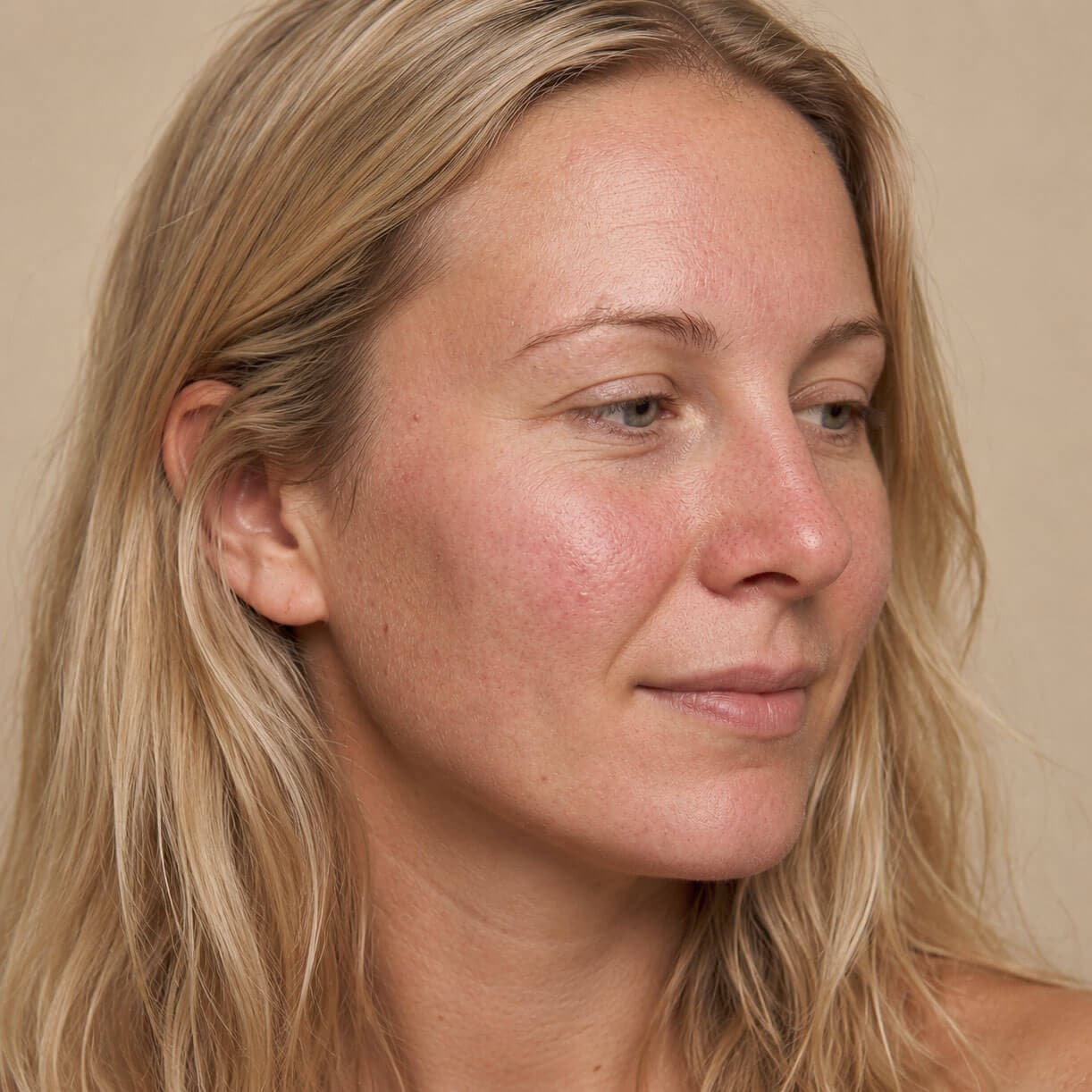
Sensitive skin
"Sensitive" is a symptom, not a diagnosis. Learn what drives reactive skin, the routine that calms it, and what to leave out.

Dry skin
Dry skin is usually a barrier problem, not simply a water problem. Here's the difference between dry and dehydrated, why it matters, and the routine that actually helps.
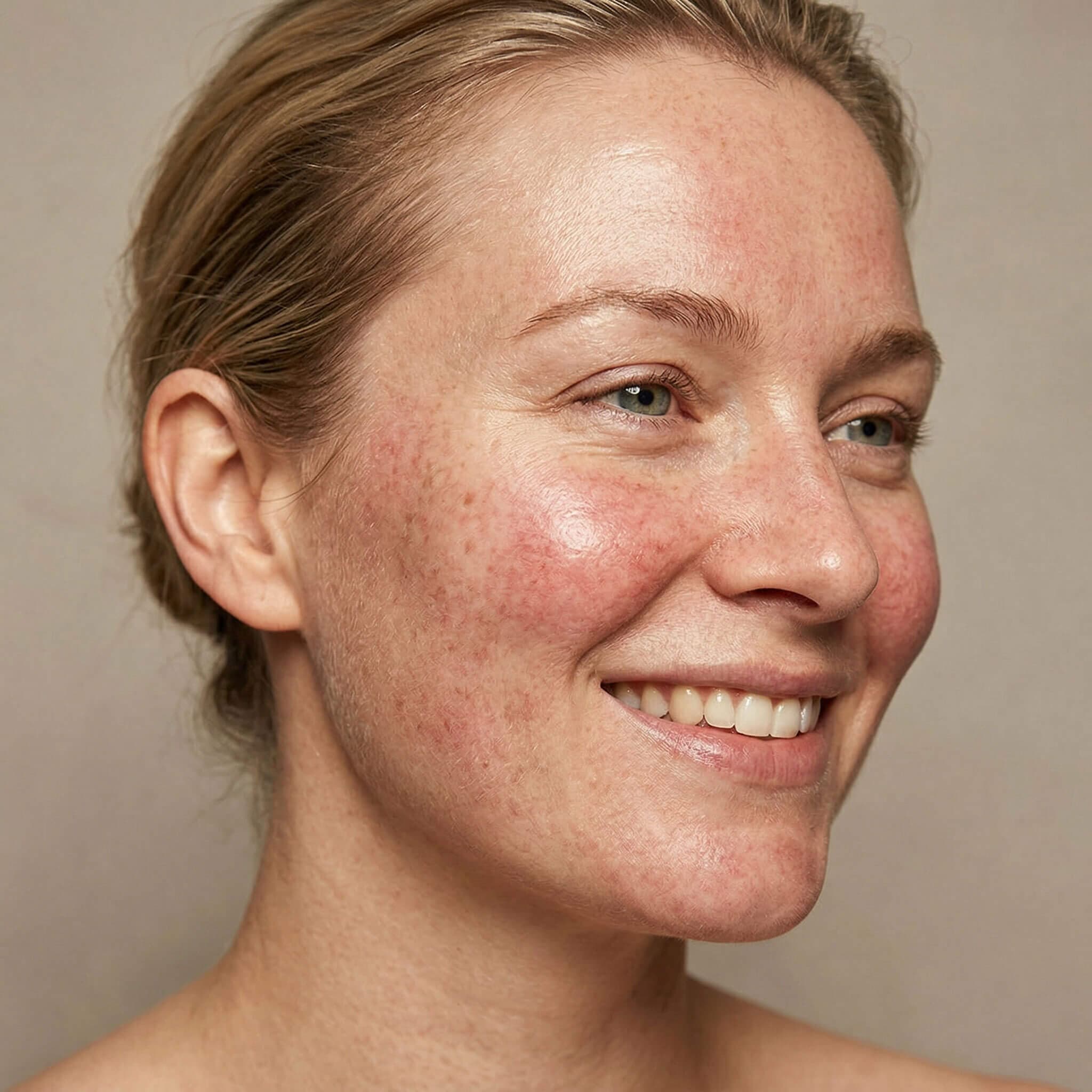
Rosacea and redness
Rosacea is a chronic inflammatory condition, not a temporary flush. Here's what causes it, what calms it, and the routine that doesn't make the reactivity worse.
Related ingredients
Citations
- Cosmetic Ingredient Review. Amended Safety Assessment of Chamomilla Recutita-Derived Ingredients as Used in Cosmetics. 2016. — CIR safety assessment
- Srivastava JK, Shankar E, Gupta S. Chamomile: a herbal medicine of the past with bright future. Mol Med Rep. 2010;3(6):895-901. — PMID 21132119
- Asaadi Y, Eslami S, Kelishadi MR, et al. Anti-inflammatory effect of chamomile from randomized clinical trials: a systematic review and meta-analyses. BMC Complement Med Ther. 2025. — PMID 40665590