
Anthemis Nobilis Flower Water
A gentle-feeling Roman chamomile water used for skin comfort and conditioning. Nice in calm formulas, but the human skincare evidence is modest and allergy-prone users should be thoughtful.
At a glance
What Anthemis Nobilis Flower Water does for skin, and how to read the practical safety signals.
- Used mainly for skin conditioning and a calmer feel in gentle formulas.
- Best understood as botanical support, not a stand-alone redness or acne treatment.
- Allergy-prone skin should be thoughtful because chamomile belongs to the daisy family.
- Type
- Botanical water
- Rating
- Pregnancy
- Considered safe
- Comedogenic rating
- 0/5 (Won't clog pores)
- Vegan
- Yes
- Suited skin types
- All skin types
On this page
The short answer
Anthemis Nobilis Flower Water is Roman chamomile water.
In skincare, it is usually there for one reason: to make the formula feel calmer and more comforting.
That is useful. It is also easy to overstate.
Roman chamomile water is not a redness treatment on the level of azelaic acid, and it is not an acne active like salicylic acid. It is a botanical support ingredient. In the right fragrance-free formula, that can be exactly what sensitive or reactive-feeling skin needs: not another loud active, less drama.
What the evidence actually shows
The Cosmetic Ingredient Review safety assessment[1] concluded that Anthemis nobilis flower extract, flower oil, powder, and flower water are safe in current cosmetic use when formulated to be non-sensitising. The same report describes these ingredients as fragrance and skin-conditioning agents, with flower water reported up to 10% use in cosmetic products.
That is a safety and use-pattern conclusion, not proof that chamomile water transforms the skin.
For the broader chamomile story, a 2010 review[2] describes chamomile as containing terpenoids and flavonoids and notes its long traditional use for inflammation, wounds, and cosmetic preparations. A 2025 systematic review and meta-analysis of randomized trials[3] found anti-inflammatory signals for chamomile, especially in mucositis and oral inflammation settings.
Helpful? Yes.
Direct proof that Roman chamomile flower water in a face cream will erase redness? No.
That distinction matters. Good skincare should make you calmer, not make every plant water sound like a prescription medicine wearing linen trousers.
Why it can still be useful
Even with modest evidence, chamomile water has a practical place:
- Skin-conditioning: it can make a formula feel softer and more comforting.
- Soothing positioning: it fits well in routines for redness-prone, dry, or easily irritated skin.
- Low heaviness: botanical waters can support comfort without making the formula greasy.
- Routine-friendly behavior: it works well beside humectants, barrier ingredients, and gentle actives.
The finished product matters more than the ingredient alone. A calm formula with chamomile water, aloe, allantoin, niacinamide, glycerin, and panthenol is very different from a fragranced "calming" toner that is basically perfume with a botanical alibi.
Where it fits in a routine
Roman chamomile water sits well beside:
- Aloe Barbadensis Leaf Extract: botanical comfort and light hydration support.
- Allantoin: soothing plus mild softening.
- Niacinamide: barrier support and redness-prone routine tolerance.
- Sodium hyaluronate, glycerin, and urea: humectants that help hydration do the boring but important work.
- Panthenol and green tea: common support ingredients for gentle daily formulas.
There is no famous "do not combine" rule with chamomile water. The bigger issue is individual botanical sensitivity.
Who should be cautious
Chamomile belongs to the Asteraceae/Compositae family - the same broad plant family as daisies, ragweed, and calendula.
Most people will not react to a well-formulated chamomile water product. But if you already know you are allergic to this plant family, or your skin reacts unpredictably to botanical extracts, patch testing is sensible.
Sensitive skin does not automatically need "natural" ingredients. It needs ingredients and formulas it can tolerate.
That is the calm answer, and calm answers tend to age better in skincare.
The practical takeaway
My goal with this guide was to gather the useful science on Roman chamomile flower water in one place, so you can stop hunting for the next clever fix and do the simple, effective things your skin actually needs.
That is also why I made the Danish Skin Care Kit: a calm routine built around documented ingredients, and one that has helped more than 100,000 people with problem skin. If even the smallest question is still nagging you, send me an email at info@danishskincare.com.
Common questions
What is Anthemis Nobilis Flower Water?
It is Roman chamomile flower water, a botanical water used in cosmetics for skin conditioning and a soothing feel.
Is chamomile water proven to reduce redness?
The evidence is modest. Chamomile has anti-inflammatory research behind it, but strong human facial-skincare trials for Roman chamomile water specifically are limited.
Can chamomile water irritate sensitive skin?
Most people tolerate it well in properly formulated products, but chamomile belongs to the daisy family. If you know you react to Compositae/Asteraceae plants, patch test or avoid it.
Reading a real label?
Scan a product to see how it is formulated
Upload a photo of the ingredient list and get a quick ingredient-by-ingredient read against the evidence-led database.
Found in these Danish Skin Care products

Roman chamomile flower water helps keep the leave-on salicylic acid treatment feeling calmer on redness-prone problem skin.

Used alongside azelaic acid, niacinamide, panthenol, sodium hyaluronate, and green tea in the targeted treatment serum.

Included in the night cream as part of a soothing support system around retinol and moisturising ingredients.

The Kit includes chamomile flower water across the routine, where it supports a calmer daily feel.
Skin conditions it actively helps with
Where the published evidence puts Anthemis Nobilis Flower Water on the short list of active ingredients worth reaching for.
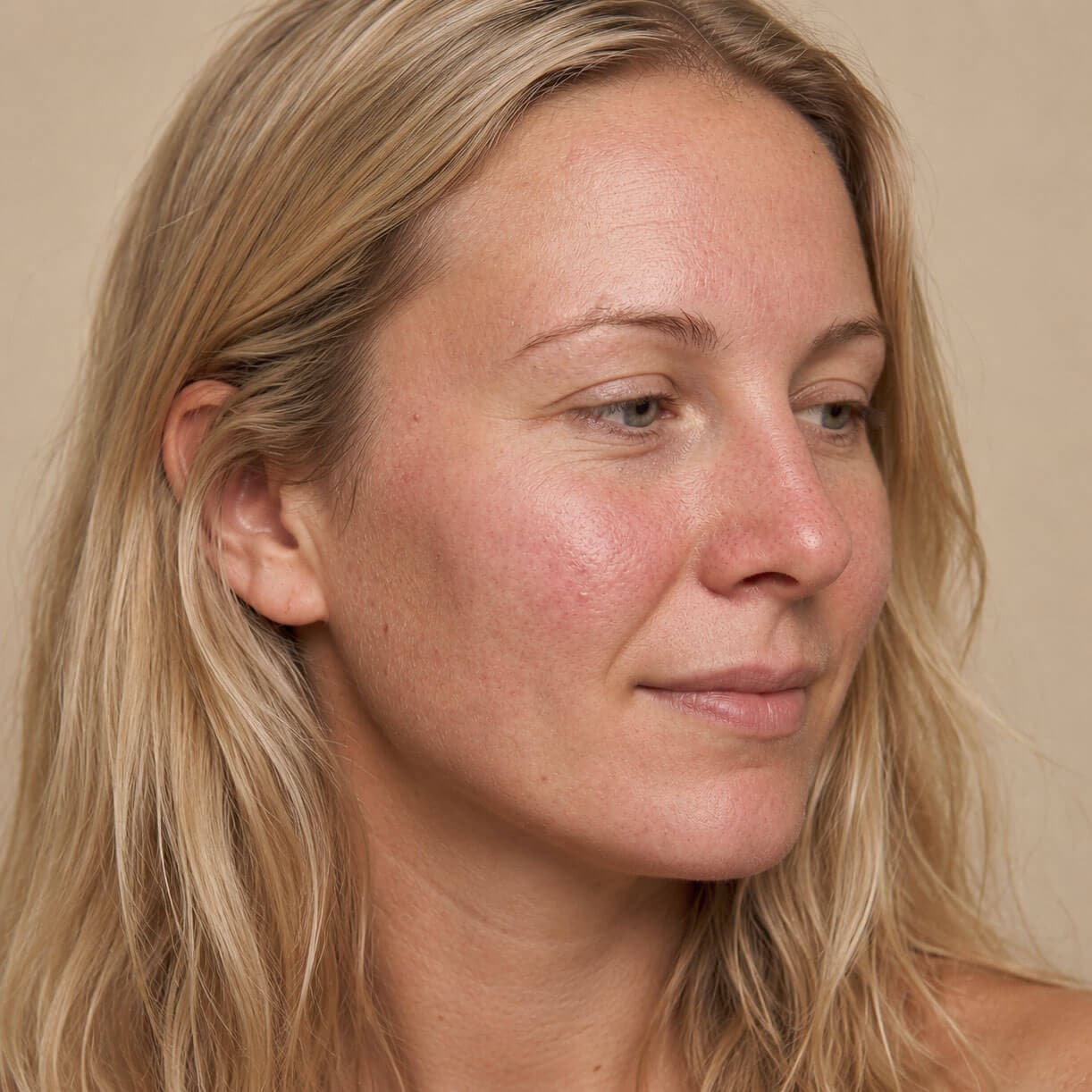
Sensitive skin
"Sensitive" is a symptom, not a diagnosis. Learn what drives reactive skin, the routine that calms it, and what to leave out.

Dry skin
Dry skin is usually a barrier problem, not simply a water problem. Here's the difference between dry and dehydrated, why it matters, and the routine that actually helps.
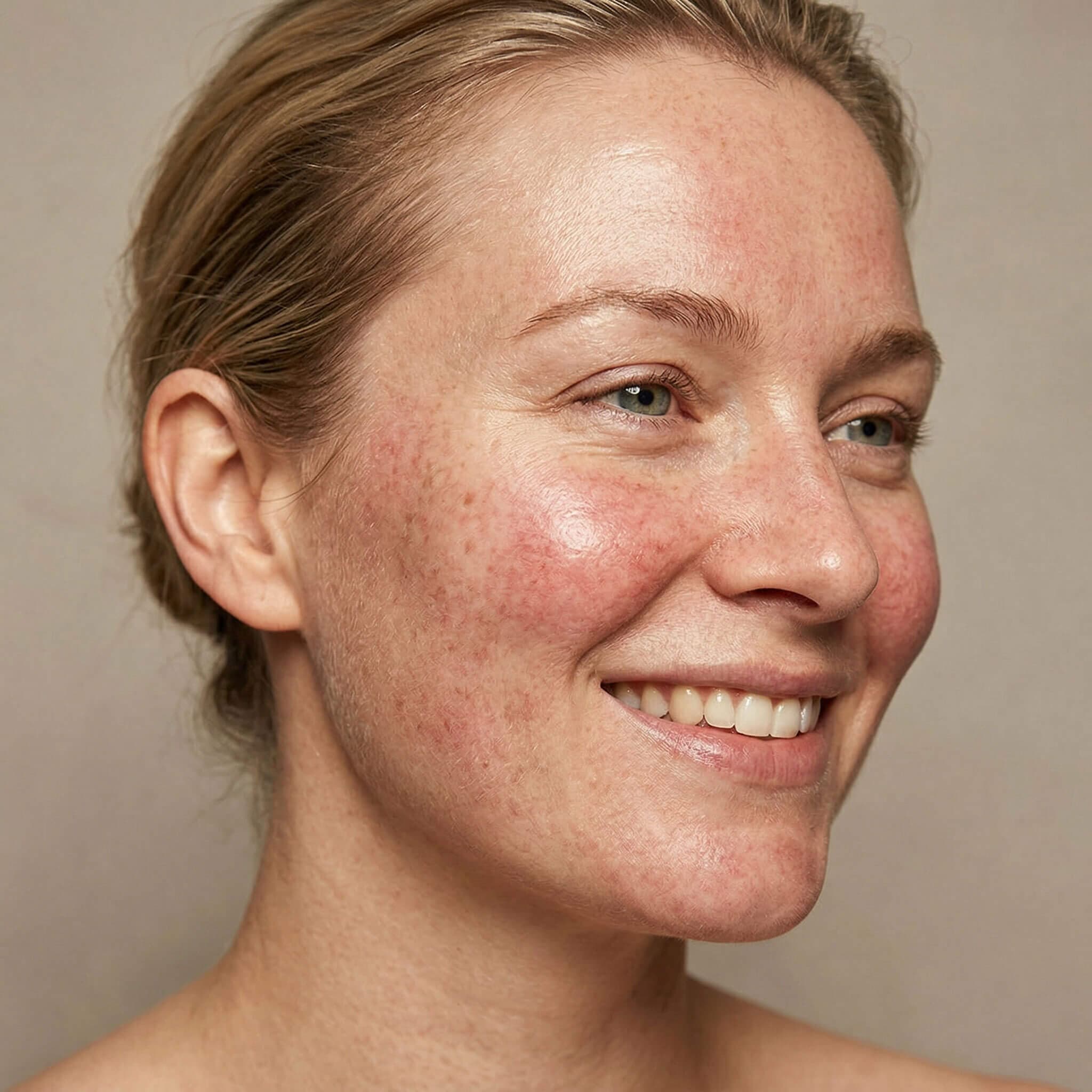
Rosacea and redness
Rosacea is a chronic inflammatory condition, not a temporary flush. Here's what causes it, what calms it, and the routine that doesn't make the reactivity worse.
Related ingredients
Citations
- Burnett CL, Bergfeld WF, Belsito DV, et al. Safety Assessment of Anthemis nobilis-Derived Ingredients as Used in Cosmetics. Int J Toxicol. 2017;36(3_suppl):51S-56S. — CIR safety assessment
- Srivastava JK, Shankar E, Gupta S. Chamomile: A herbal medicine of the past with bright future. Mol Med Rep. 2010;3(6):895-901. — PMID 21132119
- Asaadi Y, Eslami S, Kelishadi MR, et al. Anti-inflammatory effect of chamomile from randomized clinical trials: a systematic review and meta-analyses. BMC Complement Med Ther. 2025. — PMID 40665590