
Brimonidine
A prescription gel that can temporarily reduce persistent facial redness from rosacea. It is sign-specific and can sometimes worsen flushing or redness.
At a glance
What Brimonidine does for skin, and how to read the practical safety signals.
- Prescription role: Topical brimonidine is approved for persistent, non-transient facial erythema of rosacea in adults.
- Fast but temporary: Trials found visible improvement from about 30 minutes, with effect across the day rather than a cure for rosacea.
- Sign-specific: It narrows superficial blood vessels; it does not treat papules, pustules, Demodex, or fixed telangiectasia directly.
- Type
- Prescription alpha-2 agonist
- Rating
- Pregnancy
- Discuss with a clinician
- Comedogenic rating
- 0/5 (Won't clog pores)
- Vegan
- Yes
- Suited skin types
- All skin types
On this page
The short answer
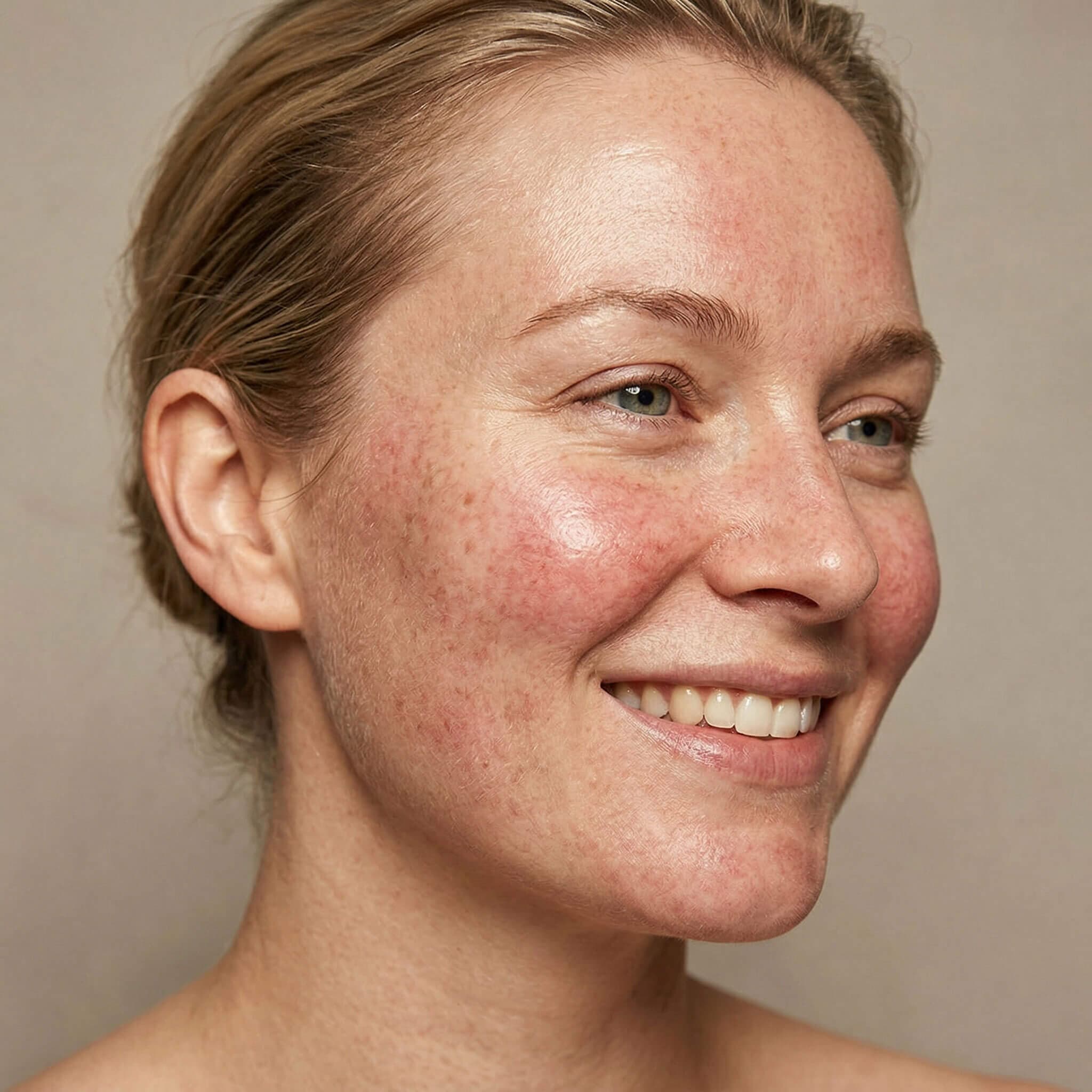
Topical brimonidine is a prescription gel for persistent facial redness caused by rosacea in adults. It narrows superficial blood vessels, so the skin can look less red for part of the day.
It does not cure rosacea. It does not treat every sign, and some people experience worse redness, flushing, or burning as the effect changes or after application.
This is a medicine to use with a qualified prescriber, not an ingredient to experiment with from an unknown seller.
How brimonidine works
Brimonidine is an alpha-2 adrenergic receptor agonist. In plain language, it sends a narrowing signal to small blood vessels near the skin surface. The dictionary guide to vasoconstrictors explains that term in more detail.
Less blood flowing close to the surface can reduce persistent erythema. The effect is temporary because the medicine controls vessel width; it does not remove the underlying rosacea tendency.
That job is different from:
- azelaic acid, ivermectin, or metronidazole for inflammatory signs
- laser or intense pulsed light for selected fixed vessels and redness
- trigger management for flushing episodes
- gentle skincare for comfort and barrier support
Treatment should match the sign you want to treat.
What the trials show
Two phase III randomized vehicle-controlled studies tested once-daily brimonidine tartrate gel in adults with moderate to severe persistent facial erythema. Improvement was greater than vehicle, appeared from about 30 minutes, and was measured across 12 hours on treatment days[1].
Those controlled trials did not find rebound as a major study outcome, but the authors also noted that trial conditions may differ from daily practice.
An eight-day randomized study in 92 people with self-perceived severe erythema found more brimonidine users reported control of facial redness and improvement in appearance than vehicle users[2]. Treatment-related adverse events were also more common with brimonidine, although most were mild and temporary.
The honest summary: brimonidine can create meaningful daytime redness control for the right person, but response and tolerance vary.
What it does not treat
Brimonidine is sign-specific.
It does not reliably:
- clear papules and pustules
- treat Demodex-associated inflammation
- close fixed telangiectasia permanently
- reverse rhinophyma or thickened tissue
- manage ocular rosacea
- diagnose whether redness is rosacea, contact dermatitis, lupus, seborrheic dermatitis, or another condition
If bumps, eye symptoms, or thickening are the main issue, the treatment plan needs a different centre.
How prescription use works
The current US label instructs adults to apply a pea-sized amount once daily to each of five facial areas - forehead, chin, nose, and both cheeks - as a thin even layer, avoiding eyes and lips[3].
Follow the instructions supplied with your exact medicine. Do not use more to chase a whiter result, apply it to irritated or broken skin, or copy dosing from another country's product.
Let prescribed medication dry before makeup. The guide to makeup for rosacea covers low-friction application and removal.
Rebound, flushing, and other cautions
The DailyMed label warns that some people had erythema return worse than baseline, experienced new or increased flushing, developed pallor or excessive whitening, or had redness outside treated areas[3].
Other reported effects include burning, contact dermatitis, dizziness, slowed heart rate, and low blood pressure. Some systemic post-marketing cases required hospital care, particularly with unapproved use.
Contact the prescriber if redness becomes dramatically worse, whitening is uneven or extensive, or you feel faint or dizzy. Seek urgent help for swelling of the lips or tongue, throat tightness, hives, breathing trouble, or severe systemic symptoms.
Keep the tube away from children. Accidental ingestion can be dangerous.
Who needs extra medical review
Tell the prescriber about pregnancy, breastfeeding, heart or circulation conditions, low blood pressure, depression, kidney or liver problems, and all medicines you use. Alpha-adrenergic effects and drug interactions need individual judgement.
Do not stop another prescribed medicine because you think it worsens flushing without first speaking to the clinician who prescribed it.
The practical takeaway
Brimonidine can temporarily reduce persistent rosacea redness by narrowing superficial blood vessels. The effect can be fast and useful, especially when background colour has a real social or emotional cost.
It is not a cure and it is not the right tool for every rosacea sign. Rebound redness and systemic effects are the reasons to treat it as a prescription medicine rather than a clever cosmetic trick.
My goal with this guide was to put the useful evidence and the uncomfortable cautions in the same place. A calm routine can support the skin around treatment, but the dose and decision belong with your prescriber. If you have a general skincare question, email me at info@danishskincare.com.
Common questions
What does brimonidine do for rosacea?
It temporarily narrows superficial facial blood vessels to reduce persistent redness. It does not cure rosacea or directly treat inflammatory bumps and fixed vessels.
How quickly does topical brimonidine work?
Clinical trials found measurable redness improvement from around 30 minutes, with an effect that can last across much of the day and then wear off.
Can brimonidine make rosacea redness worse?
Yes. Rebound redness, increased flushing, burning, pallor, and redness outside treated areas have been reported. Contact the prescriber if this happens.
Is brimonidine safe during pregnancy?
Pregnancy, breastfeeding, heart or circulation conditions, and other medicines need individual review. Use topical brimonidine only under the prescribing clinician's guidance.
Reading a real label?
Scan a product to see how it is formulated
Upload a photo of the ingredient list and get a quick ingredient-by-ingredient read against the evidence-led database.
Skin conditions it actively helps with
Where the published evidence puts Brimonidine on the short list of active ingredients worth reaching for.
Related ingredients
Citations
- Fowler J Jr, Jackson M, Moore A, et al. Efficacy and safety of once-daily topical brimonidine tartrate gel 0.5% for the treatment of moderate to severe facial erythema of rosacea: results of two randomized, double-blind, and vehicle-controlled pivotal studies. J Drugs Dermatol. 2013;12(6):650-656. — PMID 23839181
- Layton AM, Schaller M, Homey B, et al. Brimonidine gel 0.33% rapidly improves patient-reported outcomes by controlling facial erythema of rosacea: a randomized, double-blind, vehicle-controlled study. J Eur Acad Dermatol Venereol. 2015;29(12):2405-2410. doi:10.1111/jdv.13305. — PMID 26416154
- DailyMed. Brimonidine topical gel 0.33%, prescribing information. — DailyMed