
How to clean makeup brushes and let them dry properly
Wash makeup brushes with a gentle shampoo, rinse them carefully and dry them flat. Here is a manageable cleaning routine, with realistic advice for acne-prone skin.
On this page
My own experience with acne, oily skin and irritation is why I want care routines to feel manageable. Brush cleaning belongs in that same practical category: a job you can finish, without treating every breakout as evidence that you have done something wrong.
To clean makeup brushes, wash the bristle tips with lukewarm water and gentle shampoo, rinse thoroughly, then let them dry flat with the bristles over an edge. The American Academy of Dermatology recommends washing every 7–10 days.[1] Start there, then make room in your week for the drying as well as the washing.
Set up before you turn on the tap
Gather the brushes you use, a clean bowl, gentle shampoo, a fresh towel and some clean paper towel. Read any instructions supplied with the brushes, especially if they have unusual fibres or construction. You do not need to order a cleaning gadget before you begin.
Choose a clear drying spot before washing, and allow time when you will not need the brushes.
Keep washed brushes separate from those still waiting, and work through one at a time.
How to wash makeup brushes
The AAD method uses shampoo, careful rinsing and flat drying.[1] Follow these steps:
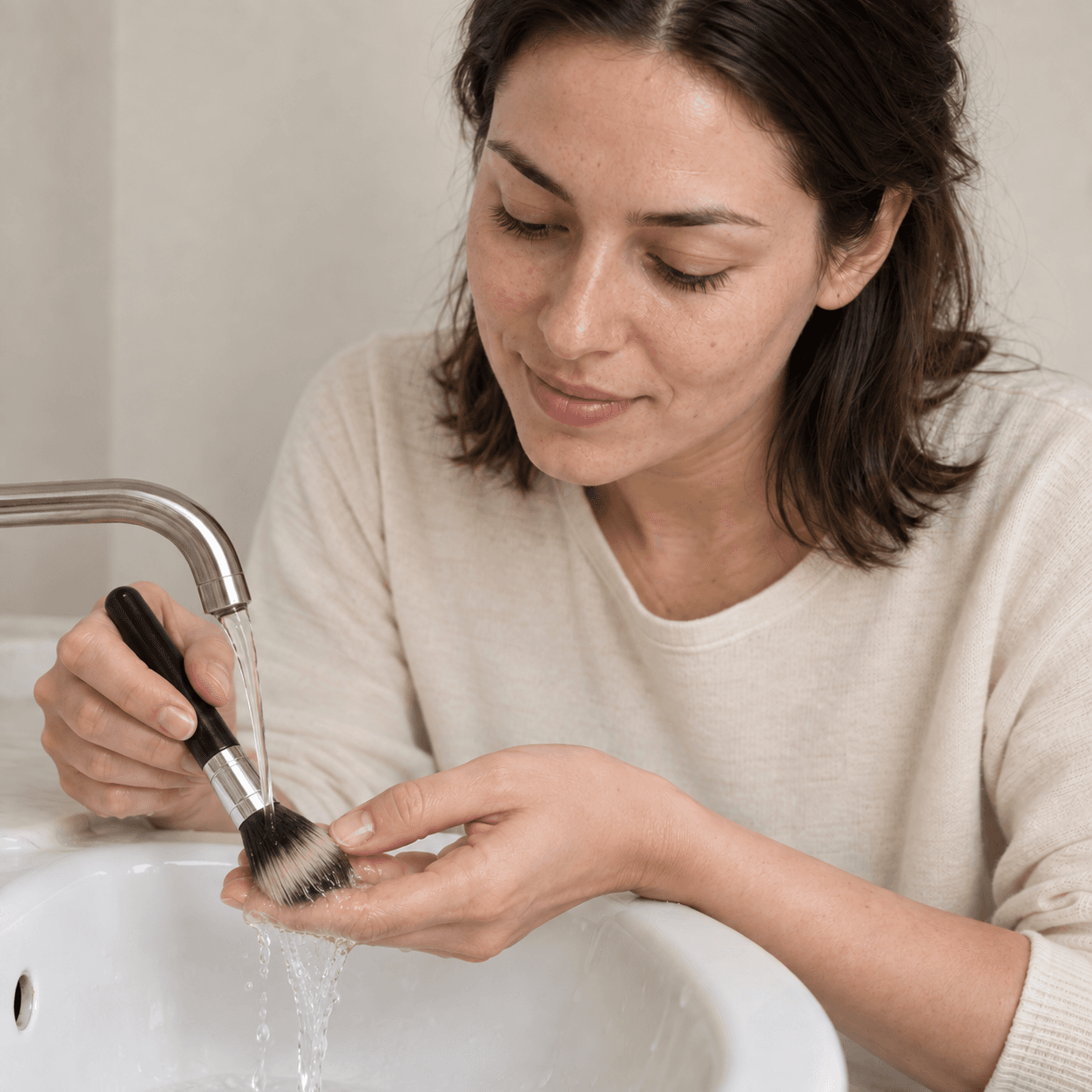
- Point the bristles down and rinse their tips with lukewarm running water. Keep the handle and the joint where the bristles attach out of the water.
- Mix gentle shampoo into a bowl of lukewarm water. Move the bristle tips through it and gently work the lather with your palm.
- Rinse the tips under the tap. Repeat the shampoo and rinse stages if makeup is still coming out.
- Finish when the rinse water is clear. Gently press out excess water with clean paper towel.
- Lay the brushes on a fresh towel, flat, with the bristles projecting beyond the counter edge. Leave space between them and wait until they are dry before storage.
If a dense brush needs another round, repeat the same process before adding a different cleaning product.
How often should you wash them?
Use the AAD's 7–10-day guidance as your normal schedule.[1] A weekly reminder can help: choose a day connected to something you already remember, such as changing your towels.
If you notice visible build-up before the reminder, bring the wash forward. Likewise, put a brush that has become dirty aside for cleaning rather than letting a calendar decide whether to use it. You can keep a small empty tray for brushes awaiting a wash so they do not drift back into the clean group.
Keep your tools for your own use. The AAD advises against sharing makeup brushes and applicators.[2] If you share a bathroom, separate containers or a label are easier than remembering whose powder brush is whose.
Drying and storage need a little space
Dry flat, not upright with the wet bristles above the handle. The AAD warns that water running into the joint can loosen the glue holding the brush together.[1] The edge-of-counter arrangement is useful because the bristles can hang free.
Choose a spot where the brushes cannot be knocked onto the floor. Keep the handles supported and the drying towel away from the basin splash zone. A specialist drying rack is optional.
I would avoid promising an exact drying time. Check the brushes themselves before packing them away rather than assuming that a set number of hours guarantees they are ready. If they still feel damp, leave them out longer.
Once dry, put them in a clean holder or case. For travel, plan the wash before the final packing rush. A second unused brush you already own can be convenient while one dries; you do not need to buy duplicates of the entire set.
If washing does not go as planned
If rinse water still carries makeup, repeat the shampoo-and-rinse stage. If there is foam, continue rinsing. Those are useful things you can observe directly, without guessing a bacterial count from the colour of the bristles.
If a brush remains stiff, sheds heavily or has a loose joint, set it aside and check its care instructions. Ask the maker whether it needs a different cleaning method or replacement. I would not keep using an uncomfortable tool simply because it was expensive.
A quick wipe or cleaning spray may have its own place according to the product instructions. Do not assume that any spray provides the same cleaning as this wash, or that an “antibacterial” label means every possible organism has been removed. Follow the stated use instead of inventing an alcohol, bleach or kitchen-cleaner mixture.
What clean brushes can and cannot tell you about acne
A 2020 study found microbial contamination in used cosmetics and makeup sponges. It did not test brushes or establish that cleaning brushes clears acne.[3] That distinction gets lost when a striking laboratory result becomes a social-media caption.
Clean your tools, but do not use the result as a diagnosis. If you still get spots afterwards, that does not mean you failed to wash carefully enough. Makeup-related breakouts and other acne causes can need their own assessment.[2]
The guide to why makeup can cause breakouts covers that separate question. If your concern is irritation during application or removal, the rosacea and makeup guide discusses a gentler approach.
Take extra care around an irritated eye
The FDA advises avoiding eye makeup during an infection and discarding eye cosmetics used when it began. Stop irritating eye products and seek medical advice if irritation persists.[4] Do not make another cleaning experiment your plan for an eye that remains sore.
Keep track of which products and tools you used and bring that information to the clinician. Ask what to replace and when to resume makeup. Washing a brush does not replace that conversation.
I built Danish Skin Care around routines that people can live with. For your brushes, the next step can be a bowl, shampoo, a place to dry and a reminder you will notice. Finish the job, put the dry tools away, and let it be one small part of caring for your skin.
People also ask
How often should I clean makeup brushes?
The American Academy of Dermatology recommends every 7–10 days. A weekly reminder is a useful way to organise it. Wash sooner if you notice obvious makeup build-up or the brush becomes dirty.
Can I use shampoo to wash makeup brushes?
Yes. AAD guidance uses gentle or clarifying shampoo diluted in lukewarm water. Follow any care instructions for your particular brushes and rinse the bristles thoroughly.
Should makeup brushes dry standing upright?
No. Dry them flat with the bristles hanging beyond the counter edge. Water draining towards the handle can loosen the glue. Store the brushes only once they are dry.
Will cleaning my brushes clear my acne?
Brush cleaning is a useful hygiene habit, but it cannot diagnose or treat every cause of acne. If breakouts continue, review the makeup and skincare routine and ask a dermatologist for help.
Keep reading
Citations
- American Academy of Dermatology. How to clean your makeup brushes.American Academy of Dermatology
- American Academy of Dermatology. I have acne! Is it okay to wear makeup?American Academy of Dermatology
- Bashir A, Lambert P. Microbiological study of used cosmetic products: highlighting possible impact on consumer health. J Appl Microbiol. 2020;128(2):598-605. doi:10.1111/jam.14479.Aston University research repository
- U.S. Food and Drug Administration. Eye Cosmetic Safety.U.S. Food and Drug Administration