
Ethylhexyl Triazone
A photostable organic UVB filter used in modern sunscreen systems. It contributes strong UVB absorption but needs other filters for balanced broad-spectrum protection.
At a glance
What Ethylhexyl Triazone does for skin, and how to read the practical safety signals.
- UVB specialist: Ethylhexyl Triazone mainly absorbs UVB, the wavelengths most closely tied to sunburn.
- Formula team player: It is combined with UVA filters to create broad-spectrum sunscreen.
- Photostable: It releases absorbed UV energy quickly and can repeat the cycle efficiently.
- Type
- UV filter
- Rating
- Pregnancy
- Considered safe
- Comedogenic rating
- 0/5 (Won't clog pores)
- Vegan
- Yes
- Suited skin types
- All skin types
On this page
The short answer
Ethylhexyl Triazone is a modern organic sunscreen filter that absorbs mainly UVB radiation.
It is very efficient and photostable, so formulators use it to build strong SPF protection. It is not broad-spectrum protection by itself. A good sunscreen combines it with filters that cover UVA as well.
You may also see it discussed as Octyl Triazone, EHT, or the trade name Uvinul T 150. On an EU ingredient list, the INCI name is Ethylhexyl Triazone.
What it does in sunscreen
UVB is the shorter-wave part of ultraviolet sunlight most closely linked with sunburn. It also contributes to DNA damage and skin cancer risk.
Ethylhexyl Triazone absorbs UVB energy before that energy reaches living skin cells. A spectroscopy study[2] found that the molecule returns from its excited state through very rapid internal conversion. In plain language, it takes in UV energy, releases it safely as lower-energy motion, and resets quickly enough to repeat the job.
That is what formulators mean by photostable. The filter does not fall apart rapidly after doing its work once.
Why it cannot carry a sunscreen alone
An SPF number mainly reflects protection against sunburn, which is weighted toward UVB. UVA reaches deeper, contributes to pigmentation and premature skin ageing, and also matters for skin cancer risk.
Ethylhexyl Triazone needs partners. A broad-spectrum formula may combine it with UVA filters such as avobenzone or other modern filters available in that market.
Do not judge protection by spotting one fashionable ingredient. Look for:
- broad-spectrum or UVA labeling that follows local rules
- an SPF suitable for your exposure
- water resistance when swimming or sweating
- a texture you can apply generously and reapply
The finished formula and tested protection matter more than an impressive INCI list.
Safety and the EU limit
The European scientific committee assessed Octyl Triazone at a maximum use concentration of 5% and concluded that the available data provided an appropriate safety margin[1]. It is authorised in EU cosmetics as a UV filter up to that level.
A 2019 human tape-stripping study[3] found Ethylhexyl Triazone within layers of the stratum corneum after sunscreen application. Microencapsulation reduced that movement through the outer layer. This study looked at distribution in the stratum corneum; it should not be exaggerated into either "nothing enters skin" or "the filter is circulating through the body."
Safety belongs to the permitted concentration and the tested finished product. More filter is not automatically better sunscreen.
Is it good for sensitive or acne-prone skin?
Ethylhexyl Triazone is not an established comedogenic ingredient, and it has no useful standalone comedogenic score. Acne response depends on the complete sunscreen:
- oils, waxes, and film formers
- fragrance or alcohol content
- how the texture behaves under sweat
- how much you apply
- how thoroughly and gently you remove it
Sensitive skin can react to any finished product. Patch test a new sunscreen along the side of the face for several days when your skin is very reactive, but remember that a small-area test cannot predict eye sting or comfort across a full hot day.
Pregnancy and sunscreen
Ethylhexyl Triazone is permitted for cosmetic sunscreen use in the EU and is generally treated as suitable during pregnancy in finished products used as directed. If your clinician has given specific advice, follow it.
Pregnancy often increases concern about pigmentation, which makes daily broad-spectrum protection especially useful. If you remain uncomfortable with an organic-filter formula, a mineral sunscreen with zinc oxide or titanium dioxide is a reasonable preference. The sunscreen you apply properly is more useful than the theoretically ideal one left in the drawer.
The practical takeaway
Ethylhexyl Triazone is a capable UVB specialist. It helps a sunscreen reach strong, durable SPF protection, while other filters complete the UVA side of the job.
Do not hunt for it as a serum or judge a sunscreen by this one name. Choose a tested broad-spectrum product that feels comfortable enough to use in the right amount.
I gathered the useful science here so you can stop chasing the next clever filter and return to a simple, effective routine. That is also why I created the Danish Skin Care Kit: the routine I built after helping more than 100,000 people with problem skin. If you have a question about a sunscreen label or your routine, write to me at info@danishskincare.com.
Common questions
Is Ethylhexyl Triazone a chemical sunscreen filter?
Yes. It is an organic UV filter that absorbs mainly UVB radiation and releases the energy through rapid molecular relaxation.
Does Ethylhexyl Triazone protect against UVA?
Not adequately by itself. It is mainly a UVB filter and should appear in a finished sunscreen with suitable UVA filters.
Is Ethylhexyl Triazone safe for acne-prone skin?
The filter itself is not an established pore-clogger. Whether a sunscreen suits acne-prone skin depends more on the complete formula, texture, and how you remove it.
Reading a real label?
Scan a product to see how it is formulated
Upload a photo of the ingredient list and get a quick ingredient-by-ingredient read against the evidence-led database.
Skin conditions it actively helps with
Where the published evidence puts Ethylhexyl Triazone on the short list of active ingredients worth reaching for.
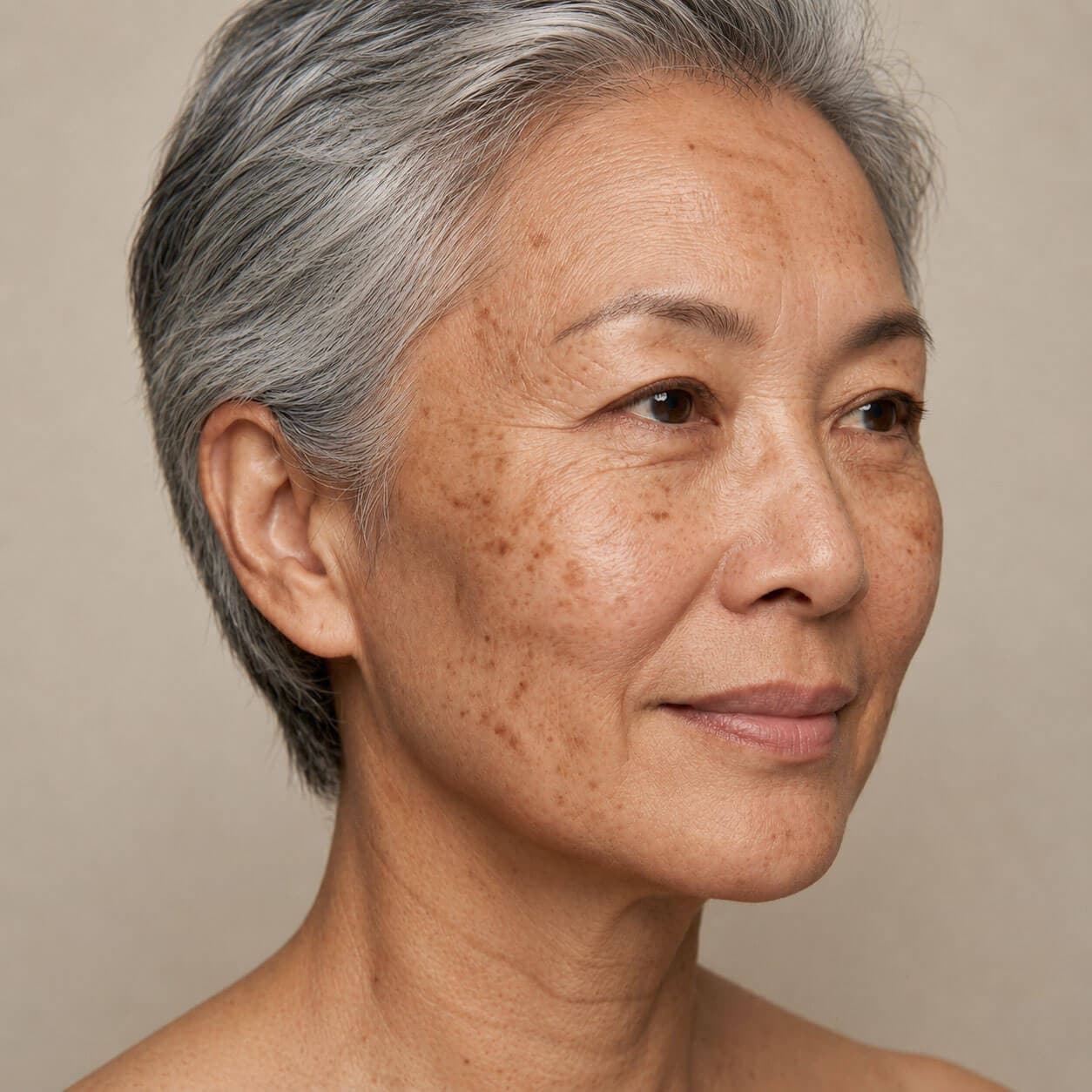
Pigmentation
Pigmentation is one of the most-asked-about, most-misunderstood skin concerns. Here's what's happening in your skin and the slow, evidence-led routine that actually fades it.

Signs of ageing
Wrinkles, sallowness, slack tone, and uneven pigment all share the same drivers. Here's the unglamorous routine that genuinely slows them.
Related ingredients
Citations
- European Commission. Opinion on 2,4,6-Trianilino-(p-carbo-2′-ethylhexyl-1′-oxi)-1,3,5-triazine. SCC plenary session, 24 June 1997. — SCC 1997
- Baker LA, et al. Ultrafast Transient Absorption Spectroscopy of the Sunscreen Constituent Ethylhexyl Triazone. J Phys Chem Lett. 2017;8(9):2129-2134. — PMID 28437110
- Scalia S, Battaglioli S, Bianchi A. In vivo Human Skin Penetration of the UV Filter Ethylhexyl Triazone: Effect of Lipid Microparticle Encapsulation. Skin Pharmacol Physiol. 2019;32(1):22-31. — PMID 30380536