
Bis-Ethylhexyloxyphenol Methoxyphenyl Triazine
A photostable, oil-soluble organic UV filter that covers UVA and UVB and helps stabilise filter combinations in modern broad-spectrum sunscreens.
At a glance
What Bis-Ethylhexyloxyphenol Methoxyphenyl Triazine does for skin, and how to read the practical safety signals.
- Broad spectrum: Bemotrizinol absorbs across UVA and UVB rather than specialising in only one narrow band.
- Photostable: It holds up well under UV exposure and can help stabilise less stable filters in a finished formula.
- Low systemic absorption: Human maximum-use testing found plasma levels largely below quantification.
- Type
- UV filter
- Rating
- Pregnancy
- Considered safe
- Comedogenic rating
- 0/5 (Won't clog pores)
- Vegan
- Yes
- Suited skin types
- All skin types
On this page
The short answer
Bis-Ethylhexyloxyphenol Methoxyphenyl Triazine is the INCI name for bemotrizinol, usually shortened to BEMT. You may also know it by the trade name Tinosorb S.
It is an oil-soluble organic sunscreen filter with broad UVA and UVB absorption. Formulators value it because it is photostable and can help stabilise other filters in a sunscreen system.
In June 2026, the U.S. FDA added bemotrizinol to the over-the-counter sunscreen monograph at concentrations up to 6%[1]. It had already been used in sunscreens in many other markets for years.
Why the name is so long
The ingredient list uses the standard INCI name, not the short name that fits comfortably into a conversation. On a label, look for:
Bis-Ethylhexyloxyphenol Methoxyphenyl Triazine
Bemotrizinol and BEMT are easier scientific and regulatory shorthand. Tinosorb S and Parsol Shield are supplier trade names. They point to the same UV-filter molecule, but a trade name can also describe a particular commercial grade supplied to formulators.
What it does in sunscreen
BEMT absorbs ultraviolet energy across both UVA and UVB. That broad coverage makes it useful in high-protection formulas, but one impressive filter does not replace finished-product testing.
A sunscreen still needs:
- an appropriate balance of filters
- even distribution in the formula
- a film that spreads and stays on skin
- verified SPF and UVA performance
- a texture people will apply generously
The presence of BEMT tells you something useful about the filter system. It cannot tell you the final SPF, UVA protection factor, water resistance, eye comfort, or finish by itself.
Photostability and filter teamwork
Some UV filters lose performance under irradiation unless the formula protects or stabilises them. BEMT is known for strong photostability and for helping other absorbers manage excited-state energy.
A 2020 photochemistry study[3] examined BEMT with less stable UV absorbers and found that stabilisation can involve both optical shielding and energy-transfer mechanisms. Bathroom translation: the filters do not work as strangers standing in separate corners. Their combination and surrounding formula influence how the whole system behaves in light.
This is why reading sunscreen INCI lists as a ranking game often misleads. A formulator is building a team, not collecting fashionable names.
Absorption and safety
The 2023 maximum-use pharmacokinetic study[2] applied 6% BEMT sunscreens to 75% of the body surface four times daily. Plasma concentrations were mostly below the analytical limit of quantification, and the authors concluded that the results supported the safety of 6% BEMT for sunscreen use.
The FDA's 2026 final action permits it up to 6% under the U.S. monograph conditions[1]. That conclusion belongs to the allowed concentration, dosage forms, manufacturing controls, and finished products used as directed. It is not permission to buy raw powder or make sunscreen at home.
For pregnancy, BEMT is used in regulated finished sunscreens and is generally treated as a suitable option when used as directed. If your clinician has given you specific advice, follow it. Sun protection itself is especially useful when pregnancy makes pigmentation easier to trigger.
Sensitive and acne-prone skin
BEMT is not an established comedogenic ingredient. A comedogenic score of zero here means there is no good evidence that the filter itself predictably blocks pores; it does not guarantee that every sunscreen containing it will suit every acne-prone face.
The complete formula matters more:
- oils, waxes, and film formers
- fragrance or alcohol content
- finish and water resistance
- how it behaves with sweat
- whether you remove it gently at night
Sensitive skin can react to any finished product. Patch testing can help with delayed irritation, though it cannot predict eye sting or how the formula feels across a hot day.
How to use the label information
Do not hunt for BEMT as if every sunscreen without it is outdated. Look at the tested claims first:
- broad-spectrum or recognised UVA labelling
- SPF appropriate to your exposure
- water resistance when swimming or sweating
- a texture you can apply in the proper amount
Then use the INCI list to understand how the product may achieve those claims. The UV Index can help you judge the day's exposure, while the guide to sunscreen reapplication explains how to maintain the film outdoors.
The practical takeaway
Bemotrizinol is a modern, photostable UVA and UVB filter with low measured systemic absorption and a useful role in broad-spectrum sunscreen systems.
Its long INCI name is worth recognising. The best sunscreen choice still comes down to the finished formula, verified protection, and whether you can wear enough of it without making your morning miserable.
Common questions
Is bemotrizinol the same as Tinosorb S?
Yes. Bemotrizinol and BEMT refer to the ingredient whose INCI name is Bis-Ethylhexyloxyphenol Methoxyphenyl Triazine; Tinosorb S is a trade name.
Does bemotrizinol protect against UVA and UVB?
Yes. It is a broad-spectrum organic filter, though the finished sunscreen still needs testing because protection depends on the complete filter system and formula.
Is bemotrizinol safe for acne-prone skin?
The filter is not an established pore-clogger. Breakout risk depends more on the complete sunscreen texture, other ingredients, sweat, and removal.
Is bemotrizinol approved in the United States?
Yes. In June 2026, FDA added bemotrizinol to the U.S. OTC sunscreen monograph at concentrations up to 6% under the final order's conditions.
Reading a real label?
Scan a product to see how it is formulated
Upload a photo of the ingredient list and get a quick ingredient-by-ingredient read against the evidence-led database.
Skin conditions it actively helps with
Where the published evidence puts Bis-Ethylhexyloxyphenol Methoxyphenyl Triazine on the short list of active ingredients worth reaching for.
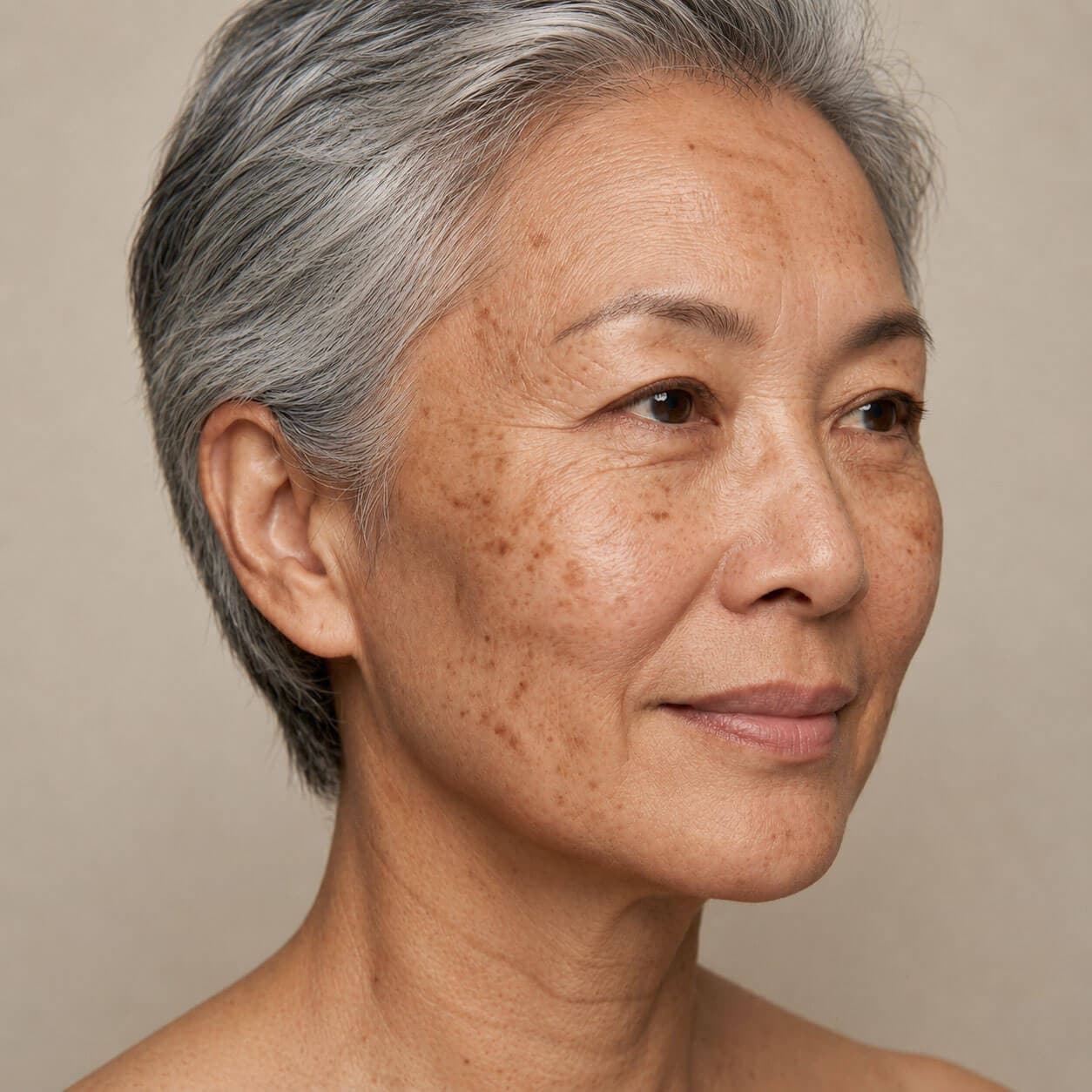
Pigmentation
Pigmentation is one of the most-asked-about, most-misunderstood skin concerns. Here's what's happening in your skin and the slow, evidence-led routine that actually fades it.

Signs of ageing
Wrinkles, sallowness, slack tone, and uneven pigment all share the same drivers. Here's the unglamorous routine that genuinely slows them.
Related ingredients
Citations
- U.S. Food and Drug Administration. FDA Expands Sunscreen Options for the First Time in 20 Years. 2026. — FDA 2026
- D'Ruiz CD, Plautz JR, Schuetz R, et al. Preliminary clinical pharmacokinetic evaluation of bemotrizinol. Regul Toxicol Pharmacol. 2023;139:105344. — PMID 36738872
- Herzog B, Giesinger J, Settels V. Insights into the stabilization of photolabile UV-absorbers in sunscreens. Photochem Photobiol Sci. 2020;19(12):1636-1649. — PMID 33300922