
Can gel nails cause a rash on your face?
Gel nail products can cause contact allergy on the eyelids or face, even when your fingers look fine. Learn what the evidence shows, what to pause and why medical patch testing matters.
On this page
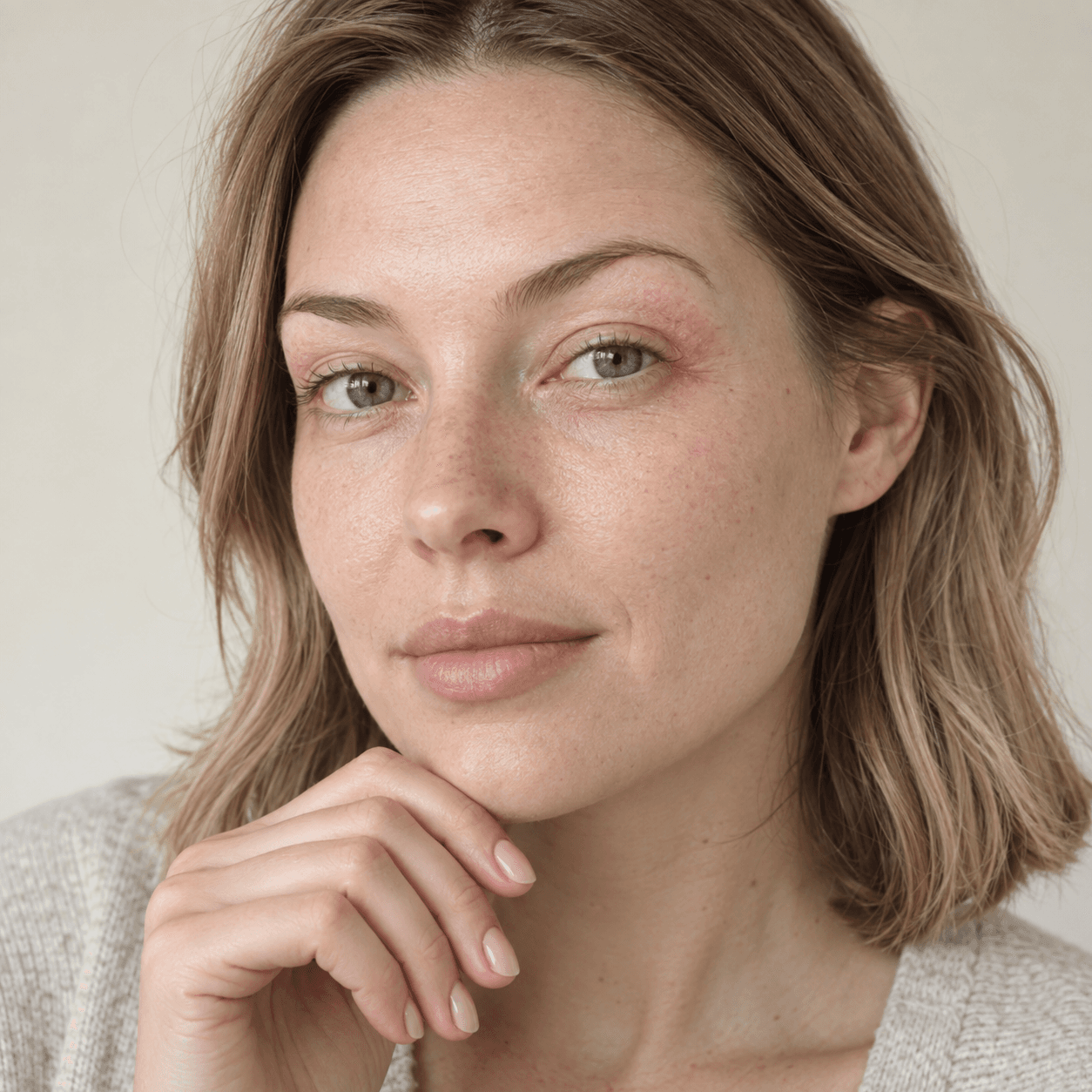
Yes. Gel nail products can cause an allergic rash on your face or eyelids through contact with your nails. The British Association of Dermatologists identifies these areas among the possible sites of a reaction.[1]
If you keep replacing your eye cream and the rash keeps returning, I would include your manicure in the conversation with a clinician. That does not make the nails guilty. It makes them something worth asking about before buying another face product.
How can a nail product affect your face?
Gel and acrylic nail systems use chemicals called acrylates or methacrylates. Contact with uncured product can lead to sensitization, meaning the immune system learns to react to a substance. Inadequate curing and getting the product on skin are concerns, including with home kits.[1]
Your face can meet substances from your hands when you touch it. The bottle does not have to say “eye cream” to be relevant to an eyelid rash. Professional application also does not guarantee that contact allergy cannot occur.
This is a question about contact with nail cosmetics. It does not mean every material with “acrylate” in its name will cause the same reaction, or that a photograph can identify the ingredient responsible. Keep the product information for someone who can assess it.
Your hands can look normal
A 2018 study across 11 European clinics identified 136 patients with allergic contact dermatitis caused by nail acrylates. Fifty had facial involvement, and in 14 the face was the only affected area.[2] So clear fingers do not rule out a connection.
These were patients assessed in specialist clinics. The figures do not mean that roughly one in three people who wear gel nails will develop a facial rash. They describe where dermatitis appeared among people already diagnosed with this allergy.
The distinction matters when reading alarming headlines. This study makes facial symptoms worth investigating; it does not give your personal probability of developing an allergy. It also included occupational exposure as well as customers, so it should not be presented as a survey of ordinary manicure appointments.
What newer research adds
An Amsterdam clinic study published in 2024 described 67 patients diagnosed with contact allergy from acrylate-containing nail cosmetics. Forty-nine were consumers and 18 were nail professionals. Fingers, hands, and the head or neck were common affected sites.[3]
Sixty-five of the 67 reacted to HEMA, short for 2-hydroxyethyl methacrylate, during patch testing. That helps explain why a dermatologist may include it when investigating nail-related dermatitis. It does not mean an ingredient label can replace the test.
The researchers reported complete clearing in 80% after avoiding contact with acrylate-containing products. That is encouraging, but this was a retrospective clinical series, not a trial assigning people different treatments. It cannot promise your rash will clear on a particular date, or establish that nails are the cause in your case.
I would take one practical message from these studies: mention your nails, even if you booked the appointment to discuss your face.
Allergy, irritation and other eyelid problems can look similar
Allergic contact dermatitis involves an immune reaction to a particular substance. Irritant dermatitis comes from exposure that irritates the skin. Both can leave skin uncomfortable and inflamed, so itch or a photograph alone cannot reliably separate them.[4]
An allergic reaction may develop hours or days after contact. It therefore need not appear while you are sitting at the manicure table. Previous use without trouble does not exclude allergy developing later.
Describe changes in texture and comfort as well as colour: flaking, swelling, soreness and itch are useful details. Inflamed skin may look red, purple, greyish or darker than usual depending on skin tone.
Other facial conditions need different care. Our guide to perioral dermatitis around the eyes explains why clusters of small bumps should not automatically be labelled an allergy. The broader sensitive-skin guide covers everyday tolerability, but neither page can diagnose a recurring rash.
What to do before the next manicure
Pause further gel or acrylic applications if you suspect a reaction and arrange medical advice. Discuss appropriate removal rather than scraping or peeling the nails off yourself. Keep a record that helps someone investigate:
- Dates of your appointments or home applications, and when symptoms started.
- Product names and ingredient lists for the base, colour, top coat and any glue.
- Photographs of the rash, plus any changes around fingers or nails.
- Your face products and any work involving nail materials.
A short timeline is more useful than a folder of unrelated ingredient warnings. For example, “new set on Friday, itchy lids on Sunday, same face routine” gives a clinician a starting point. It is an example of useful recordkeeping, not proof of causation.
Avoid repeatedly changing the whole skincare routine while you wait. Use gentle care you already tolerate and ask which moisturizer suits the affected area. Medication around the eyes needs the right choice, strength and duration from a clinician.[4]
Medical patch testing is different from trying a product at home
A dermatologist may recommend patch testing for persistent or recurring dermatitis. Small amounts of selected allergens go under patches, usually on the back, and the clinic checks delayed reactions across several visits. This differs from a skin-prick test for immediate allergy.[5]
Tell the clinic about your nail products so it can decide which allergens to investigate. Follow its preparation and aftercare instructions; getting patches wet or removing them too soon can affect the results. A negative first round may lead to further testing if the suspected trigger was not included.
Do not put uncured nail gel on your arm as a DIY patch test. Skin contact can cause sensitization.[1] The advice in our guide to testing a new skincare product concerns finished skincare, and should not be applied to uncured nail materials.
Do not treat a HEMA-free label as permission to repeat the experiment either. Patients in the European study often reacted to more than one acrylate.[2] Let the test results and professional advice guide the next product decision.
When to seek prompt help
Arrange an assessment if eyelid symptoms persist or keep returning. Seek urgent care for eye pain, changes in vision, light sensitivity, or a swollen eyelid that is hot, painful or blistered. The NHS lists these as reasons for urgent assessment.[6] They deserve attention beyond changing cosmetics.
If testing confirms an allergy, keep the written allergen names and share them with clinicians and your dentist before relevant treatment. Some related materials have medical or dental uses; this is information for planning care, not a reason to refuse it.[1]
For now, your most useful next step may be a product list and an appointment. I would rather help you ask a better question than add another serum to skin that is already asking for a break.
People also ask
Can gel nails affect my eyelids if my hands look fine?
Yes. In a European study of 136 patients with diagnosed nail-acrylate allergy, 14 had skin lesions only on the face. Normal-looking hands do not rule it out, but an eyelid rash can have other causes and needs assessment.
Can I become allergic after using gel nails for years?
Previous tolerance does not rule out a newly developed contact allergy. An allergic rash can appear hours or days after exposure. Bring the history of your nail products and symptoms to a clinician instead of assuming an old favourite cannot be involved.
Should I try a HEMA-free gel to see whether the rash stops?
Do not use another gel manicure as a home allergy test. HEMA is one possible allergen, and patients in the European study often reacted to several acrylates. Ask a dermatologist which substances you need to avoid before choosing an alternative.
Can I patch test my gel nail polish at home?
No. Do not apply uncured gel to your skin to test it; that exposure can cause sensitization. Medical patch testing uses selected allergens under professional supervision. It is different from trying a finished skincare product on a small area.
Keep reading
Citations
- British Association of Dermatologists. Dermatologists issue warning about UK artificial nail allergy epidemic. Published August 9, 2018; modified January 23, 2024. Accessed October 1, 2026.British Association of Dermatologists
- Gonçalo M, Pinho A, Agner T, et al. Allergic contact dermatitis caused by nail acrylates in Europe. An EECDRG study. Contact Dermatitis. 2018;78(4):254-260. doi:10.1111/cod.12942.PMID 29266254
- Steunebrink IM, de Groot A, Rustemeyer T. Contact allergy to acrylate-containing nail cosmetics: A retrospective 8-year study. Contact Dermatitis. 2024;90(3):262-265. doi:10.1111/cod.14475.PMID 38093676
- British Association of Dermatologists. Contact dermatitis. Updated June 2025. Accessed October 1, 2026.British Association of Dermatologists
- American Academy of Dermatology. Patch testing can find what's causing your rash. Written by Paula Ludmann, MS. Updated March 15, 2021. Accessed October 1, 2026.American Academy of Dermatology
- NHS. Eyelid problems. Reviewed November 17, 2023. Accessed October 1, 2026.NHS