
Can a heating pad cause a rash? Repeated heat and skin changes
A net-shaped patch where a heating pad or hot water bottle rests can come from repeated heat. Learn what to stop, why a painless mark still matters and when to have it checked.
On this page
Yes, a heating pad can cause a rash or lasting discoloration. Repeated warmth can produce a net-shaped pattern called erythema ab igne, sometimes nicknamed toasted skin syndrome. A hot water bottle can do the same, even when the heat never feels strong enough to burn.[1]
I would put the heat source aside before buying anything to fade the mark. When a patch follows the spot where you rest a heating pad, that everyday habit deserves attention. A stronger skincare routine cannot make continued heating harmless.
What does a heating pad rash look like?
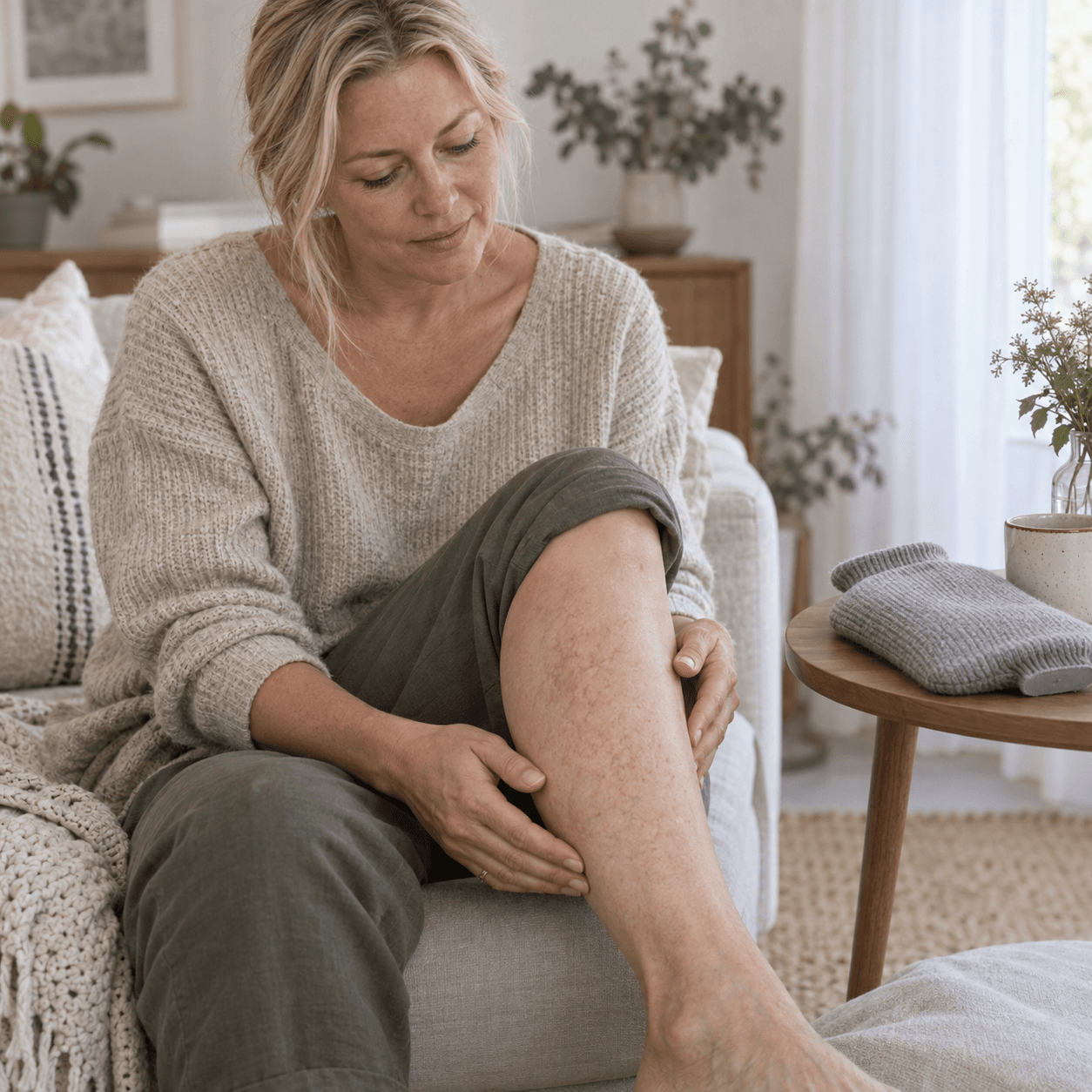
Look for a lace-like or net-shaped patch of redness or brownish discoloration over the area exposed to warmth. It may appear on the lower back, abdomen or thighs. The pattern and location matter more than whether it itches.
In a 2018 report of three patients, all had skin changes after prolonged heating-pad use, but none reported symptoms from the patches. Two were discovered during examinations for other reasons.[2] A painless patch can be easy to overlook, especially somewhere you rarely see.
Take a photo in ordinary light and note where the device usually sits. This helps a clinician understand the history. A photograph alone cannot confirm the diagnosis: other conditions can also produce mottled skin.
What the research tells us about repeated heat
Those three patients had used heating pads over periods ranging from six months to three years. That describes the reported cases; it does not establish a minimum exposure or a safe period of daily use.
A separate study of 71 patients with erythema ab igne found that heaters and stoves were the most frequently recorded heat sources. Laptop use and a hot water bottle also appeared in the histories.[3] Think beyond the pad: a heater aimed at your shins during working hours is worth mentioning too.
Both papers describe people who already had skin changes. Neither tells us what percentage of heating-pad users develop them, or which temperature and duration will be safe for you. I would be wary of a confident online rule promising that a particular setting prevents every problem.
Is this the same as ordinary heat rash?
No. Prickly heat usually involves small raised spots with an itchy or prickling feeling. The NHS explains that it develops when trapped sweat cannot escape normally.[4] Erythema ab igne is associated with repeated localized heat and a different pattern.
That distinction changes the next step. Keeping cool can help prickly heat, but a persistent net-shaped mark deserves a look at heating habits and, if it remains, a clinical assessment.
Temporary redness after a hot shower is another question again. Do not label every reaction to warmth with the same name, or assume that your friend's cream suits a rash that looks different.
What I would do when a mark appears
Start with the exposure, then keep the rest simple:
- Stop applying the pad or bottle to the affected area. Do not repeatedly warm the patch to check whether the pattern returns.
- Write down the device, heat setting, usual session length and how often you use it. Include a nearby heater or heated seat if relevant.
- Arrange an assessment if discoloration persists, recurs or has no clear explanation. Bring the photo and your notes.
- If heat has become essential for ongoing pain, ask your clinician about a pain-management plan that gives the affected skin a break.
For accompanying dryness on intact skin, a familiar fragrance-free moisturizer is a reasonable comfort measure. Dermatology guidance supports gentle washing and fragrance-free creams or ointments for dry skin.[5] This is dryness care, not a treatment proven to erase heat-related marks.
I would avoid experimenting with scrubs, peeling acids or a new retinoid on the patch while the cause remains unclear. You do not need to turn an unexplained mark into a product trial. Our sensitive-skin guide covers keeping routine irritation low.
Does a cover make a heating pad safe?
A cover is useful, but it should not become permission to keep heating discolored skin. Gloucestershire Hospitals advises gentle warmth, a towel between the heat source and skin, and regular skin checks when using heat treatment.[6]
Those are precautions for using heat, not instructions to continue through a new rash. Follow your device's directions and any individual advice from your clinician. Ask before restarting heat on an affected area rather than choosing a lower setting and hoping for the best.
Comfort matters when you are managing pain. So does having an alternative you can realistically use. Explain how much you rely on the device at your appointment; that detail belongs in the conversation alongside the skin change.
Will the discoloration go away?
Mild changes may settle over months after the heat stops. Established pigmentation can persist for years or remain. DermNet advises assessment of a non-healing sore or growing lump within an affected patch because these changes may need a biopsy.[1]
That does not mean a net-shaped mark is cancer. It means a changing lesion should be examined rather than treated as a cosmetic problem. A dermatologist can also advise on persistent color once the diagnosis and exposure are clear.
If you have a fresh burn instead
A fresh burn or scald needs first aid. NHS guidance says to cool it under cool running water for 20 minutes as soon as possible. Do not put creams, oils or butter on it, and do not burst blisters. Get urgent advice if you are unsure what to do; large or deep burns need emergency care.[7]
Do not wait for a burn to develop a pattern before getting help. For a lingering painless mark, book an assessment and stop the repeated heat. Those are different situations, and neither needs a new shelf of skincare.
People also ask
Can a heating pad cause a rash without burning?
Yes. Repeated heat below the level that causes an immediate burn can produce erythema ab igne, a net-shaped area of discoloration. It can be painless, so comfort alone does not mean the skin is unaffected. A persistent patch needs assessment.
Can a hot water bottle cause the same skin changes?
Yes. Repeated exposure to a hot water bottle can cause erythema ab igne, as can other sources of localized heat. Stop applying heat to a discolored patch and ask a clinician to assess it if it persists or you are unsure of the cause.
How long does a heating pad rash take to fade?
There is no reliable timetable for an individual patch. Mild changes may fade over months after heat exposure stops; established pigment can last much longer or remain. Do not keep applying heat while waiting for the color to clear.
Will moisturizer remove toasted skin syndrome?
Moisturizer may help accompanying dryness on intact skin, but it does not remove the heat exposure responsible for erythema ab igne. Stop heating the area and have persistent marks assessed before trying acids, retinoids or pigment treatments.
Keep reading
Citations
- Ngan V. Erythema ab igne. DermNet. 2003. Accessed October 8, 2026.DermNet
- Aria AB, Chen L, Silapunt S. Erythema Ab Igne from Heating Pad Use: A Report of Three Clinical Cases and a Differential Diagnosis. Cureus. 2018;10(5):e2635. doi:10.7759/cureus.2635.PMID 30034957
- Ozturk M, An I. Clinical features and etiology of patients with erythema ab igne: A retrospective multicenter study. Journal of Cosmetic Dermatology. 2020;19(7):1774-1779. doi:10.1111/jocd.13210.PMID 31696628
- NHS. Heat rash (prickly heat). Reviewed May 9, 2024. Accessed October 8, 2026.NHS
- American Academy of Dermatology. Dermatologists' top tips for relieving dry skin. Accessed October 8, 2026.American Academy of Dermatology
- Gloucestershire Hospitals NHS Foundation Trust. Ice and heat treatment. Patient information GHPI0659_02_25. Accessed October 8, 2026.Gloucestershire Hospitals NHS Foundation Trust
- NHS. Burns and scalds. Reviewed March 31, 2026. Accessed October 8, 2026.NHS