
Chilblains: why fingers and toes itch after the cold
Chilblains can cause itchy, swollen fingers and toes after damp cold. Learn how they differ from frostbite, how to warm up gently and when to get medical advice.
On this page
Chilblains are inflamed, itchy or tender patches that can develop after exposure to damp cold, often on fingers and toes. Also called pernio, they can happen above freezing. The problem involves how small blood vessels respond to cold.[1] Warm up gently rather than putting sore fingers against a radiator.
I would start with your gloves and shoes before your skincare shelf. A painful winter patch deserves the right explanation, and buying a richer cream does not establish what caused it. This guide covers ordinary chilblains, the warning signs that need a different response, and what treatment studies can tell us.
What do chilblains look and feel like?
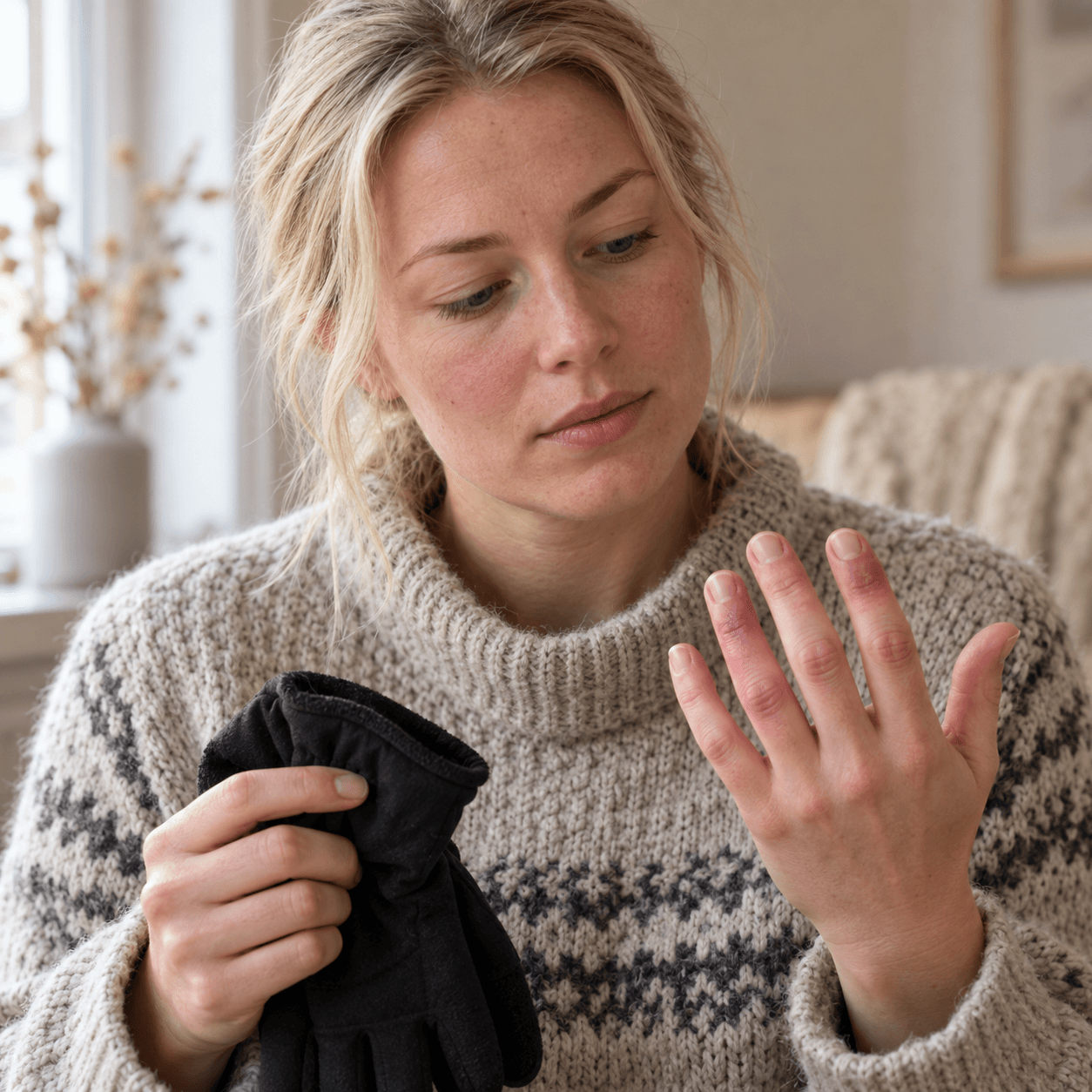
DermNet describes local swelling, itching or burning, and red-purple colour changes that appear several hours after cold exposure and last more than a day. Toes, fingers and ears are common sites. More severe patches can blister or develop sores.[1]
The NHS notes that redness can be harder to see on brown or black skin.[2] Pay attention to discomfort and swelling as well as colour. A photograph taken in useful light can help you describe the changes, but comparing yourself with an online image is not a diagnosis.
Write down when the patch appeared and what you were doing beforehand. Mention whether shoes or gloves got wet, whether the same spots return each winter, and whether symptoms disappear between episodes. Those details give a clinician more to work with than “my feet look strange.”
Chilblains, frostbite and Raynaud's need different responses
Frostbite means that skin has frozen. After severe cold, hard or frozen skin, swelling with loss of feeling, or blisters require urgent medical help. Confusion, slurred speech or persistent shivering also need an emergency response. Move into shelter while arranging help; do not rub the area or apply direct heat.[3] Do not wait two weeks to see whether these symptoms settle.
Raynaud's causes episodes of altered blood flow, often with pale or white fingers, sometimes blue colouring, then redness as circulation returns. Numbness or pins and needles can accompany it, and episodes may last minutes to hours.[4] That is a different pattern from an inflamed patch that remains.
These descriptions help you explain what happened. They do not rule out a circulation problem, infection or another cause of a sore toe. If you are unsure, particularly when pain or numbness is marked, get medical advice instead of trying to name the condition from colour alone.
Keep warm without rushing the rewarming
For ordinary chilblains, prevention starts before the walk, cycle ride or wait at the bus stop. East Sussex Healthcare's podiatry guidance recommends insulating footwear, warm socks and avoiding direct heat. Extra socks or insoles should still leave enough room inside the shoe to prevent rubbing.[5]
Check the fit with the socks you actually wear outdoors. Two pairs are not helpful if they leave your toes cramped. A spare dry pair in your bag is a practical option when your shoes regularly get wet; it is easier to change them than spend the afternoon hoping they will dry.
Keep your body warm with loose layers, protect your hands and ears, and replace damp clothing. Dudley's NHS guidance stresses keeping dry and letting cold feet warm slowly, away from a fire or radiator.[6] The tempting shortcut is often to put the sore part right next to the heat. Give it time instead.
If your work makes cold exposure unavoidable, think through the awkward moments: wet gloves after a task, a draughty break room, footwear that never dries overnight. Discuss practical protection with your employer or clinician rather than treating each new patch as another cream to buy.
What can you put on the skin?
A moisturiser can help keep affected dry skin supple, according to Dudley's guidance. Avoid scratching or rubbing, and protect cracked or broken skin with a clean dressing.[6] Our emollient guide explains what moisturisers do. Supporting the skin's surface does not establish that a cream treats the underlying blood-vessel reaction.
Keep any product trial modest. I would not add exfoliating acids, fragranced oils or a stronger collection of active ingredients to a sore patch. If skin has broken, ask a pharmacist or clinician which dressing and care suit the area rather than improvising with your facial routine.
Steroid cream also needs some perspective. In a 2017 placebo-controlled trial, 34 adults with chronic chilblains used betamethasone valerate 0.1% or placebo cream. After six-week treatment periods, the steroid did not improve reported symptoms or disability more than placebo.[7]
That was a small study of one preparation in chronic chilblains. It does not answer every treatment question, but it gives no reason to assume a stronger anti-inflammatory cream will solve the problem. Ask what a proposed treatment is intended to improve, how long to try it and when to review it.
Why prescription advice can sound inconsistent
A clinician sometimes considers medicine that widens blood vessels. Evidence for one commonly used option, nifedipine, is mixed. A 2016 trial in 32 people with chronic chilblains found no significant symptom or disability advantage over placebo after six weeks. Participants had lower systolic blood pressure and more peripheral swelling with nifedipine.[8]
The findings differed from an earlier small trial, so the study authors questioned routine use. This does not mean you should stop a prescription on your own. It means the decision belongs in a conversation about your symptoms, other health conditions, possible benefits and side effects.
Neither of these trials establishes a treatment for every cause of chilblain-like skin changes. Both studied chronic chilblains in primary care. They cannot turn an uncertain rash into a diagnosis or tell you which prescription is right for you.
When to get the patches checked
Chilblains often settle within two to three weeks. Arrange medical advice if they are not improving by then, keep returning, or if you have diabetes. Pus, fever or feeling shivery also call for medical assessment.[2] With poor circulation or reduced immunity, seek advice earlier if healing is slow.[5]
Most people with chilblains are otherwise healthy.[6] Sometimes an underlying condition contributes, so persistent or unusual episodes deserve assessment. DermNet notes that clinicians may investigate secondary causes, including connective-tissue conditions, when the history or examination suggests them.[1] This is a reason to get a recurring problem checked, not to diagnose yourself with a rare disease.
For broader tightness and flaking, our winter skin guide covers that separate concern. Keep the jobs separate: describe the sore patches accurately, protect yourself from damp cold and get help when the pattern does not fit ordinary recovery. Your skincare routine can stay simple while you find the explanation.
People also ask
Can you get chilblains when it is not freezing?
Yes. Chilblains can develop after exposure to damp, chilly conditions above freezing. The small blood vessels react abnormally to cold; the skin itself does not have to freeze.
How long do chilblains take to go away?
They often settle within two to three weeks. Seek medical advice if they are not improving by then, keep returning or develop pus. Get advice earlier if you have diabetes, poor circulation or reduced immunity.
Should I put chilblains in hot water?
No. Warm your skin gradually and avoid hot water, radiators and other direct heat. Dry wet skin and use warm, dry clothing. Suspected frostbite needs urgent medical assessment rather than ordinary chilblain care.
Can moisturiser or steroid cream cure chilblains?
Moisturiser helps keep dry skin supple, but it is not a proven cure for chilblains. A small trial found no benefit of betamethasone valerate cream over placebo for chronic chilblains. Discuss treatment with a clinician instead of choosing a stronger cream yourself.
Keep reading
Citations
- Oakley A, Tang GT, Nixon R. Chilblains. DermNet. Updated February 2021. Accessed October 29, 2026.DermNet
- NHS. Chilblains. Accessed October 29, 2026.NHS
- NHS. Frostbite. Reviewed June 9, 2025. Accessed October 29, 2026.NHS
- NHS. Raynaud's. Reviewed July 20, 2023. Accessed October 29, 2026.NHS
- East Sussex Healthcare NHS Trust. Chilblains. Patient information leaflet 1011/01. August 2022. Responsible clinician: Elaine Tate. Accessed October 29, 2026.East Sussex Healthcare NHS Trust
- Dodd H. Chilblains. The Dudley Group NHS Foundation Trust. Patient information leaflet DGH/PIL/02212, version 1. September 2024. Accessed October 29, 2026.The Dudley Group NHS Foundation Trust
- Souwer IH, Bor JHJ, Smits P, Lagro-Janssen ALM. Assessing the effectiveness of topical betamethasone to treat chronic chilblains: a randomised clinical trial in primary care. Br J Gen Pract. 2017;67(656):e187-e193. doi:10.3399/bjgp17X689413.PMID 28193616
- Souwer IH, Bor JHJ, Smits P, Lagro-Janssen ALM. Nifedipine vs Placebo for Treatment of Chronic Chilblains: A Randomized Controlled Trial. Ann Fam Med. 2016;14(5):453-459. doi:10.1370/afm.1966.PMID 27621162